

 en
 English
 русский
 Español
 عربى




Two pumpers of the same model can feel like two different trucks on the same call. On the first, a firefighter reaches into a compartment, releases one latch with a gloved hand, and pulls a tray far ...
READ MORE
Fire Apparatus Equipment Mounting Systems: A Guide to Smart Compartment Storage
2026.09.11
Content
- 1 What Are Fire Apparatus Equipment Mounting Systems?
- 2 Safety, Speed, and Service Life: Why Mounting Systems Matter
- 3 Core Components of a Modern Mounting System
- 4 How to Choose the Right Mounting System
- 5 Installation and Retrofit Considerations
- 6 Frequently Asked Questions
- 7 Build a Compartment That Works as Hard as Your Crew
A firefighter opens a compartment door after a long working fire. Inside, the thermal imaging camera has slid under a halligan bar, the hose line is twisted into a knot, and a 20 kg SCBA cylinder is lying on its side. In busy stations this scene repeats every week, and it is entirely preventable.
Fire apparatus equipment mounting systems fix every tool, cylinder, and hose run in a dedicated, reachable position. When gear is mounted properly, crews stop digging, tools stop breaking, and the apparatus rolls into the station ready for the next alarm.
What Are Fire Apparatus Equipment Mounting Systems?
A fire apparatus equipment mounting system is an integrated set of storage modules installed inside the compartments of a fire truck, rescue vehicle, or specialty vehicle. Its job is to keep equipment secure during transit, organized by mission, and accessible within seconds on scene.
Core modules include:
- Slide-out drawers for heavy or frequently used items such as nozzles, adapters, and wrenches
- Pullout horizontal trays for flat gear like gas meters, tarps, and battery packs
- Pullout vertical trays for tall, narrow equipment such as pike poles and folding ladders
- Rotating trays that bring rear-compartment items to the front with a single turn
- Water hose storage racks that keep hose lengths separated and instantly deployable
These modules are usually built from aluminum, stainless steel, or engineered plastic. Material choice affects weight, corrosion resistance, load rating, and purchase cost, so it should be matched to the vehicle's operating environment and duty cycle. A station running coastal responses needs different alloys than one operating inland. The complete stowage and mounting system range covers all of these configurations.
Safety, Speed, and Service Life: Why Mounting Systems Matter
Conclusion first: proper mounting improves firefighter safety, cuts equipment retrieval time, and extends the service life of both tools and the apparatus itself. The evidence comes from everyday station operations.
Safety During Transit and Emergency Maneuvers
Standards for fire apparatus, including NFPA 1901, require that equipment carried on a vehicle be secured so that it does not become a projectile. During hard braking, a loose halligan bar or SCBA cylinder can slide, roll, or launch across the compartment and strike a seated or standing crew member. Mounting rails, retention straps, and positive locks hold every item in place regardless of road conditions.
Faster Tool Retrieval at the Scene
When every tool has a designated home, firefighters retrieve it without thinking. There is no shuffling through loose piles, no deciding which item to move first, and no reaching blindly into a dark corner. Slide-out drawers and trays bring equipment to the compartment opening, so crews keep both feet on the ground and both eyes on the incident.
Longer Equipment Life
Vibration is the silent enemy of fireground gear. A loose axe bouncing against a metal wall loses its edge, a cylinder scraping on a shelf wears its protective coating, and a hose bundle rubbing against a sharp bracket can chafe its jacket over time. Mounted components with rubber-lined clamps, padded dividers, and restrained slides keep tools separated and cushioned, so they arrive in the same condition they left the station.
Average tool retrieval time by compartment storage method - lower is faster.
Core Components of a Modern Mounting System
Apparatus builders and fleet upfitters combine a handful of proven modules to match each vehicle's mission profile. These are the most common building blocks.
Fire Truck Drawers
Drawers are the workhorses of compartment storage. They suit heavy, frequently used items - nozzles, adapters, spanner wrenches, and portable extinguisher brackets. A quality drawer runs on heavy-duty slide rails, locks open for hands-free access, and returns flush to keep the compartment aisle clear. Unlike a fixed shelf, a drawer brings the contents to the crew, so nobody has to crouch or crawl to see what is stored at the back.
 Heavy-Duty Aluminum Fire Truck Drawer with Silent Guide RailsThis drawer addresses the need for hands-free access to heavy tools like nozzles and wrenches. Its aluminum alloy frame, stainless fasteners, and silent bearings support frequent use in tight compartments.View Product →
Pullout Horizontal and Vertical Trays
Pullout trays work on the same slide-rail principle as drawers but keep an open top. Horizontal trays are ideal for flat items such as air monitoring meters, hydraulic tools, and folded tarps, while vertical trays hold tall objects like pike poles or folding ladders in a narrow footprint. Both designs allow one-handed retrieval while the firefighter keeps the other hand on the vehicle handrail.
Rotating Trays
A rotating tray, often called a turntable, is mounted on a bearing that spins 360 degrees. The crew rotates the tray to bring rear-mounted gear to the front of the compartment, which solves the "black hole" problem of deep cabinets. Rotating trays are especially valuable in corner compartments, behind wheel wells, and in other awkwardly shaped spaces where a drawer cannot fully extend.
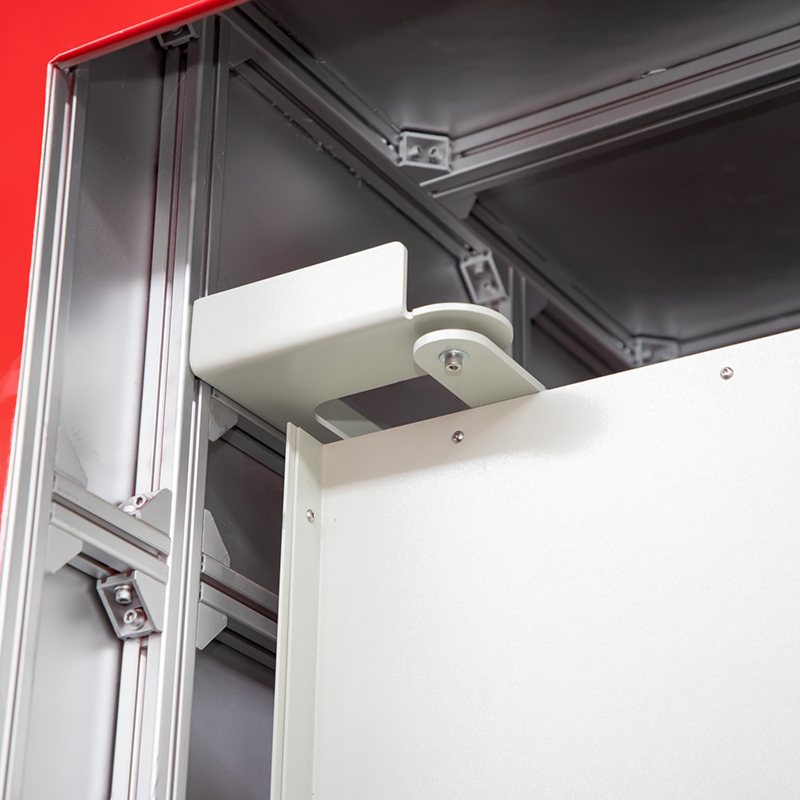 Fire Truck Rotating Tray with Two-Stage Bracket and Locking PinsThe rotating tray solves deep-cabinet access issues, especially in awkward spaces. Its two-stage bracket, gas springs, and load capacity up to 120 kg make it suitable for heavy gear in corner compartments.View Product →
Water Hose Storage Racks
Hose storage racks hold fire hose in loose coils or figure-eight folds. Each length stays separated, couplings stay accessible, and the line deploys without tangles. Racks can be mounted horizontally below a compartment ceiling or vertically along a side wall, turning space that fixed shelves would waste into organized, ready-to-pull hose capacity.
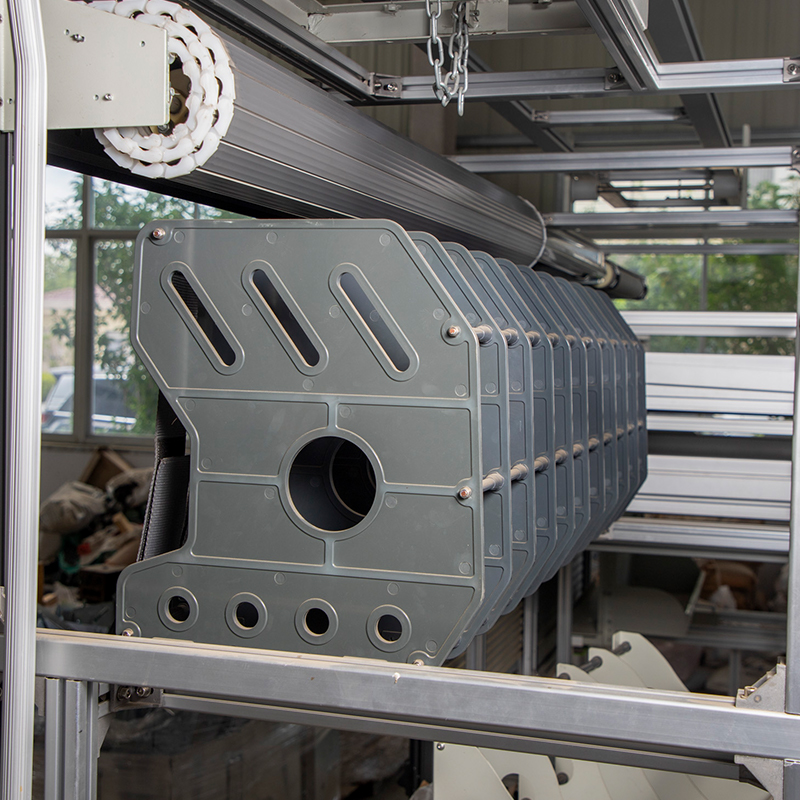 Injection-Molded PVC Fire Hose Storage Rack for 40/65/80 HosesThis rack organizes loose hose coils to prevent tangles and improve deployment. Made of durable PVC with customizable combinations, it fits 40/65/80 hoses and mounts horizontally or vertically to save space.View Product →
| Component | Best suited for | Typical load range | Access type |
|---|---|---|---|
| Slide-out drawer | Nozzles, adapters, hand tools | 40-90 kg | Full-extension slide rail |
| Horizontal pullout tray | Meters, flat tools, tarps | 30-70 kg | Telescopic rail |
| Vertical pullout tray | Pike poles, long tools | 25-60 kg | Telescopic rail |
| Rotating tray | Corner cabinets, mixed gear | 30-80 kg | 360-degree turntable bearing |
| Hose storage rack | Fire hose lengths | 20-50 kg per shelf | Fixed or pullout |
How to Choose the Right Mounting System
There is no universal layout that works for every apparatus. The right system depends on the vehicle's compartment geometry, the equipment load-out, and the environment where the rig operates. Work through these criteria in order:
- Weight and duty cycle - list every item that will live in the compartment and weigh the heaviest ones.
- Compartment depth and opening width - measure the clear interior, not the paper specification, including trim and wall thickness.
- Material compatibility - match aluminum, stainless steel, or plastic to the local climate and the cleaning chemicals used.
- Cleaning and drainage - choose components with open drainage paths so water and debris do not pool.
- Service access - confirm that mounting hardware can be reached for maintenance and that slides can be relubricated or replaced.
When these factors are weighted, load capacity and compartment dimensions dominate most real-world decisions, followed by material durability and the practical requirements of keeping the compartment clean.
- Load capacity - 30%
- Compartment size - 25%
- Material durability - 20%
- Cleaning and drainage - 15%
- Cost and lead time - 10%
Weighted decision factors when specifying mounting components.
Installation and Retrofit Considerations
Mounting systems can be specified during original apparatus construction or retrofitted into a vehicle already in service. The two paths have different trade-offs.
At the manufacturing stage, the body builder integrates slide rails, mounting brackets, and reinforcement plates directly into compartment walls and floors. This yields the cleanest result, the highest load capacity, and the best alignment between compartments and slide travel.
In retrofit projects, the existing compartment is measured first, and components are selected to fit the available envelope. Fasteners must anchor into the body structure or into reinforcement plates, never into thin exterior skins. Weight distribution also matters: heavy items should sit as low as possible and close to the vehicle's longitudinal centerline to avoid degrading handling. A straightforward rule is to keep the heaviest tools at the bottom and reserve upper compartments for lightweight, soft goods.
Frequently Asked Questions
Can mounting systems be retrofitted into an existing fire apparatus?
Yes. Most slide-out drawers, pullout trays, rotating trays, and hose racks are available as modular kits that install inside existing body compartments. The critical requirement is a reinforced mounting surface: the rails and brackets must be anchored to the body structure, not to the outer skin, to carry the rated load safely.
Which material is best for a corrosive operating environment?
Stainless steel is the first choice for coastal, industrial, or heavy-decontamination environments because it resists chloride attack and harsh cleaning chemicals. Aluminum is a lighter alternative with good corrosion resistance for most inland operations. Engineered plastic components work well for non-structural parts such as tool dividers, liners, and small organizers.
How much weight can a slide-out drawer or tray hold?
Heavy-duty drawer slides typically carry 40-90 kg per drawer. For heavier items, choose a reinforced telescopic tray with positive locks. Always check the slide manufacturer's rating at full extension, because that is the position where the highest bending load occurs.
Do mounting systems require special maintenance?
Minimal, but not zero. Slide rails and turntable bearings benefit from periodic cleaning and a light application of dry lubricant. Rubber-lined clamps should be inspected for wear, especially after hose or tool changes. In high-dust environments, open tray designs drain and dry more quickly than fully enclosed boxes.
Build a Compartment That Works as Hard as Your Crew
Fire apparatus equipment mounting systems are operational tools, not accessories. They keep firefighters safe, protect expensive equipment, and shave seconds off every turnout. When you specify a new apparatus or upgrade an existing one, start with the facts: measure each compartment, inventory the equipment, weigh the heaviest items, and then choose mounting components that match both the loads and the mission.
A well-planned layout is the difference between a compartment that stores gear and a compartment that supports crews under pressure. Our engineering team works with apparatus builders and fleet managers every day - contact us and we will help you design a storage layout that fits your vehicle and your operating conditions.
News
-
-
Every firefighter has opened a compartment door after a rough response only to find nozzles, webbing, and wrenches piled on top of each other. In gloves and low light, with the pump running, that is ...
READ MORE -
Specification meetings usually park the ladder rack near the bottom of the option sheet, a few lines above the license plate bracket. That is also why ladder racks become the complaint in year three:...
READ MORE -
Quick Answer The right fire truck boarding ladder is a fixed, upward-folding, or rotating step assembly mounted at the rear or side of the apparatus that gives firefighters a stable, non-slip surface ...
READ MORE -
Fire truck ladder racks are roof-mounted storage and deployment systems that hold ground ladders securely in transit and let firefighters lower them to the side or rear of the apparatus in seconds. ...
READ MORE -
When a fire apparatus rolls out of the station for a structure fire or a highway rescue, every bolt, hinge, and ladder surface is about to face heat, vibration, moisture, and rough handling. Some com...
READ MORE
Hey! Interested in staying in the loop? Sign up for our updates.
WE WON'T SPAM YOU, PINKY PROMISE.

Tianchang Jinlv Fire Equipment Co., Ltd.
Copyright © Tianchang Jinlv Fire Equipment Co., Ltd. All rights reserved. Custom Fire Truck Equipment Supplier Fire Apparatus Parts Factory
