

 en
en
 English
 русский
 Español
 عربى
عربى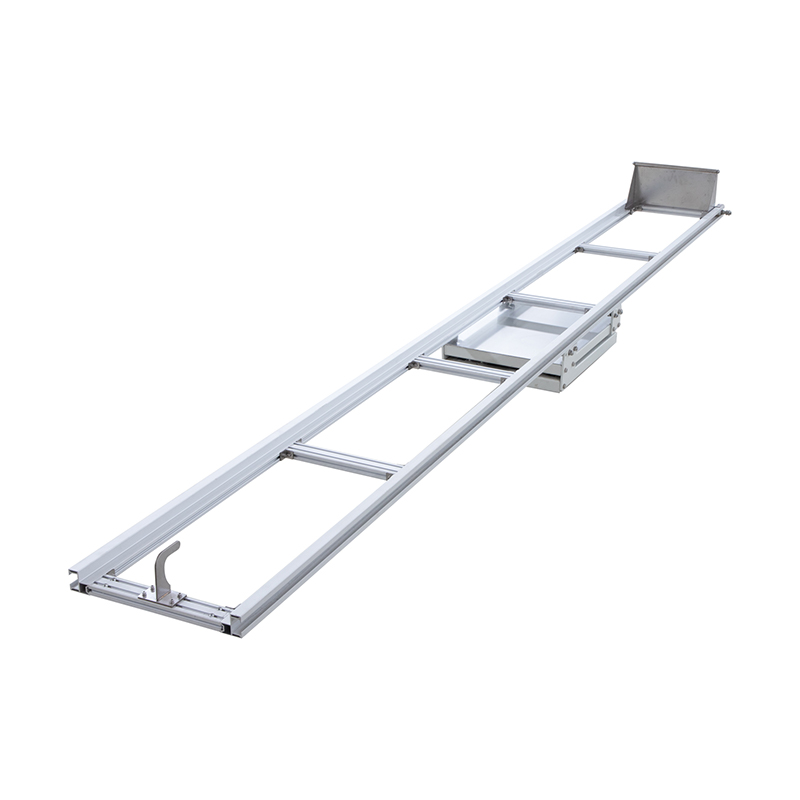




Quick Answer The right fire truck boarding ladder is a fixed, upward-folding, or rotating step assembly mounted at the rear or side of the apparatus that gives firefighters a stable, non-slip surface ...
READ MORE
Fire Truck Ladder Racks Manufacturer & Supplier Guide
2026.08.28
Content
- 1 How a Fire Truck Ladder Rack Moves the Ladder
- 2 Manual vs Electric Fire Truck Ladder Racks
- 3 Fire Apparatus Roof and Access Product Line
- 4 Materials, Tracks and Ladder Compatibility
- 5 Custom Mounting Brackets and OEM Supply
- 6 How to Evaluate a Fire Truck Ladder Racks Manufacturer
- 7 Common Questions About Fire Truck Ladder Racks
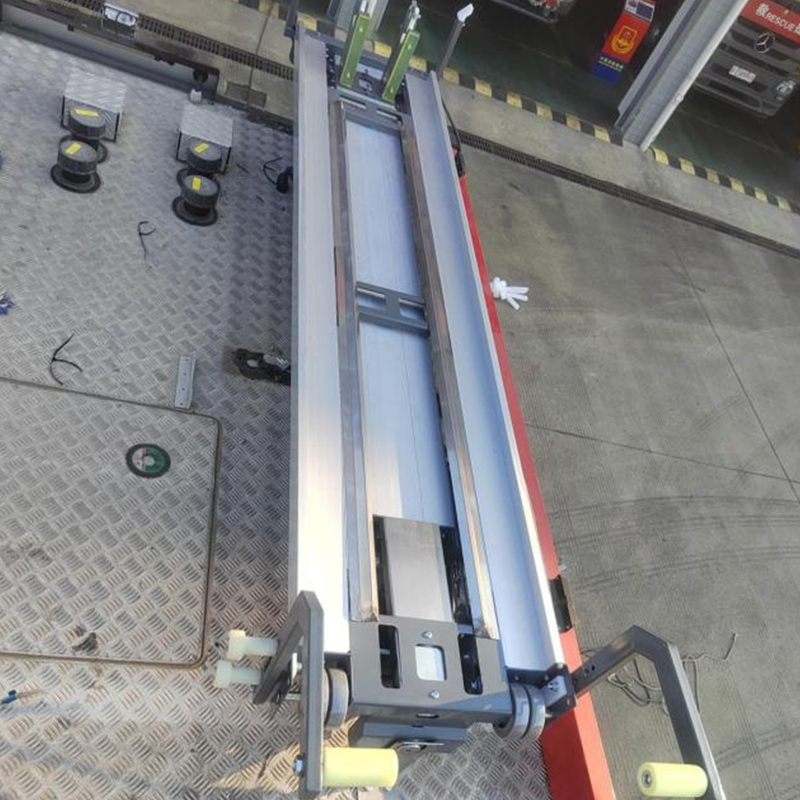
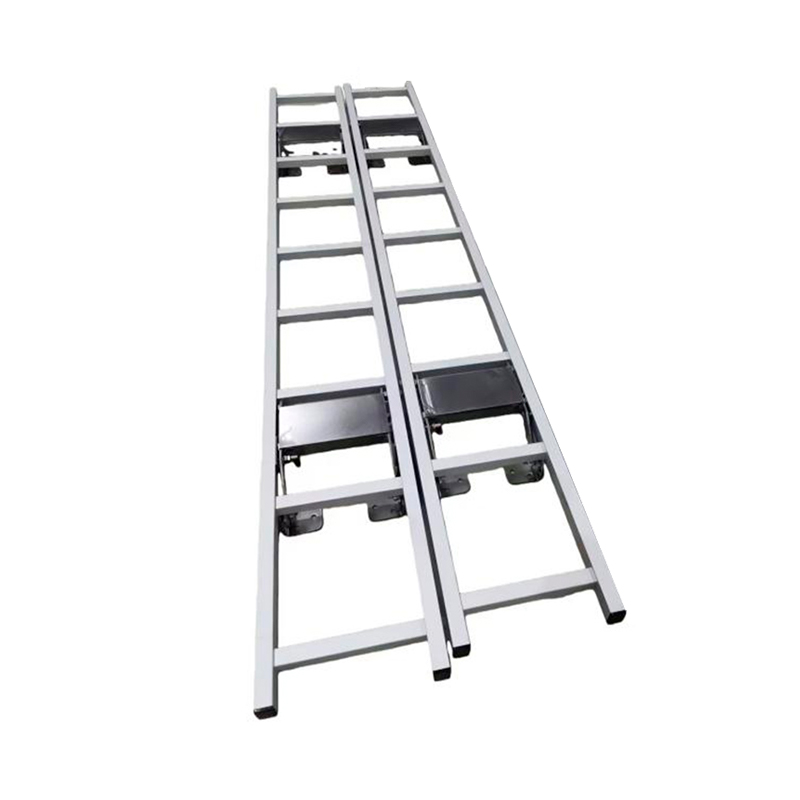
Fire truck ladder racks are roof-mounted storage and deployment systems that hold ground ladders securely in transit and let firefighters lower them to the side or rear of the apparatus in seconds. The two working options are manual racks, operated by hand through a sliding or rotating mechanism, and electric racks, which power that same mechanism to reduce physical effort during deployment. Both types are typically built from heavy-duty aluminum alloy or stainless steel, run on roller-assisted tracks, lock with self-locking handles, and accept standard roof ladder sizes including extension and folding ladders. As a fire truck ladder racks manufacturer, Tianchang Jinlv Fire Equipment Co., Ltd. produces both configurations with custom mounting brackets and OEM supply for apparatus builders and upfitters.
How a Fire Truck Ladder Rack Moves the Ladder
Every ladder rack on a fire apparatus roof does the same three jobs, whether it is operated by hand or by motor. Understanding the sequence helps a buyer see exactly where a manual system and an electric system differ, and where they do not.
1
Roof Storage
The ladder sits locked on the vehicle roof during transit, held by the rack track and self-locking handles so it cannot shift on turns or rough roads.
›
2
Slide or Rotate
The rack's sliding or rotating mechanism lets one or two firefighters move the ladder along roller-assisted tracks into deployment position.
›
3
Lower to Side or Rear
The ladder is lowered from the roof to the side or rear of the apparatus, ready for ground placement against the structure.
Manual vs Electric Fire Truck Ladder Racks
Both configurations share the same frame, track and locking hardware. The difference sits entirely in how the sliding or rotating motion is powered, which changes crew effort, response time, and long-term maintenance load.
| Aspect | Manual Fire Truck Ladder Racks | Electric Fire Truck Ladder Racks |
| Operating Method | Hand-operated sliding or rotating mechanism | Powered version of the same sliding or rotating mechanism |
| Crew Required | One or two firefighters | One or two firefighters, with reduced physical effort |
| Construction Material | Heavy-duty aluminum alloy or stainless steel | Heavy-duty aluminum alloy or stainless steel |
| Best Fit | Fleets prioritizing mechanical simplicity and low maintenance | Fleets prioritizing reduced crew fatigue on frequent-use apparatus |
Fire Apparatus Roof and Access Product Line
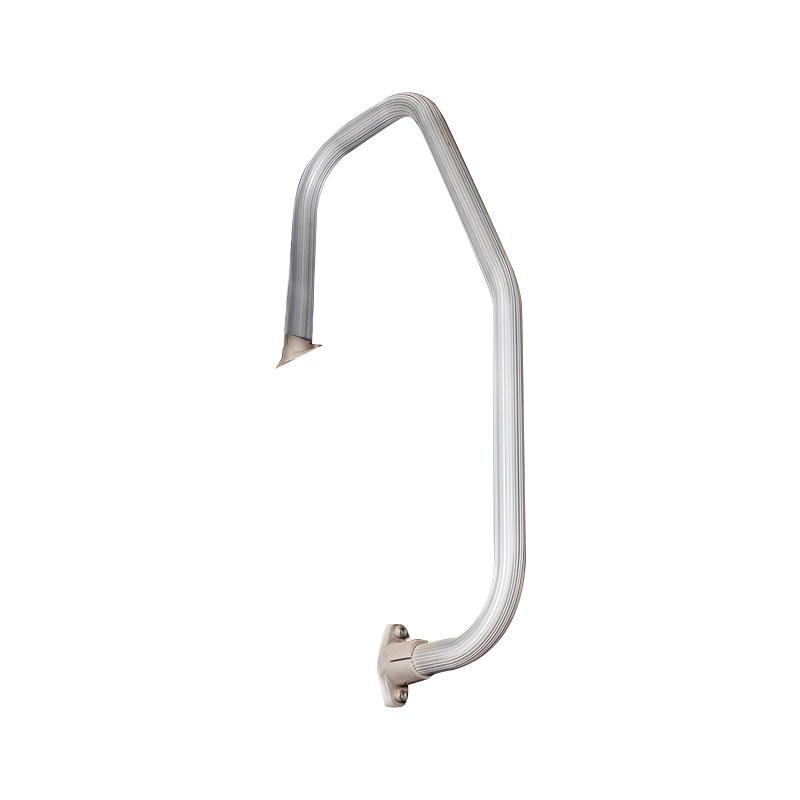
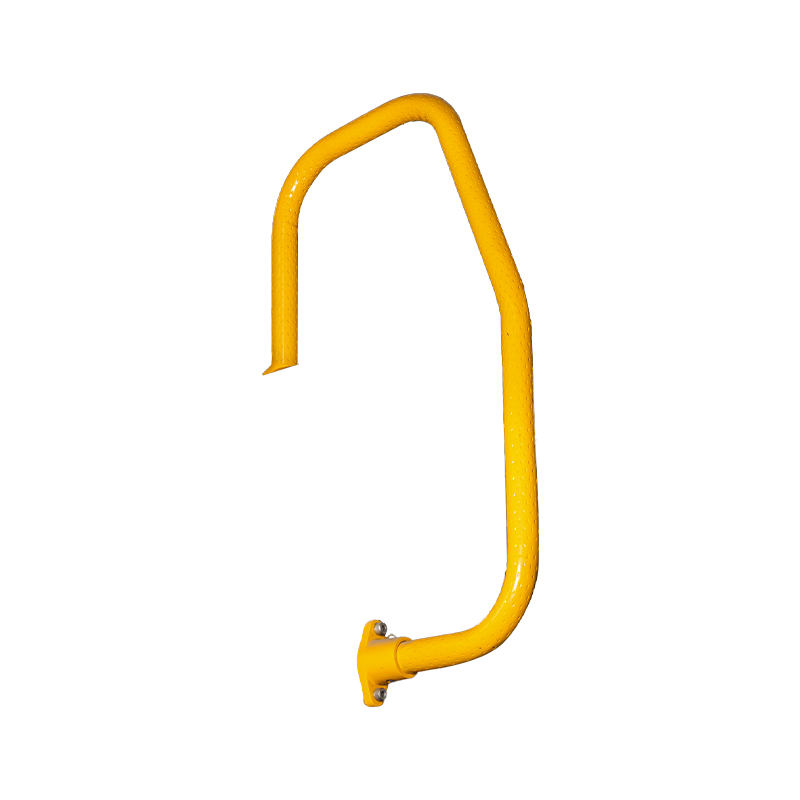
Fire truck ladder racks work alongside boarding ladders and handrails to form the complete roof-access system on an apparatus. The products below are manufactured by Tianchang Jinlv Fire Equipment Co., Ltd. and can be specified together on a single build.
Materials, Tracks and Ladder Compatibility
The frame material and track hardware decide how a ladder rack ages after years of vibration, weather exposure and repeated deployment cycles.
Aluminum Alloy Frame
Keeps added roof weight low, which matters most on apparatus already carrying a full complement of ground ladders, hose and roof-mounted equipment.
Stainless Steel Frame
Trades a small weight increase for higher resistance to road salt, coastal humidity and repeated washdown, favored by departments running long duty cycles.
Roller-Assisted Tracks
Guide the ladder along a controlled path during sliding, keeping the load centered instead of swinging as it moves toward the roof edge.
Self-Locking Handles
Hold the ladder in the stored position during transit and confirm a positive lock before the rack is released for deployment.
Ladder compatibility: standard roof ladder sizes fit directly onto the track, including both extension ladders (commonly 24 to 35 feet in fire service use) and folding attic-style ladders (commonly 10 to 16 feet), so a single rack model can usually cover more than one ladder type carried on the same roof.
Custom Mounting Brackets and OEM Supply
Roof Profile Matching
No two apparatus roofs are identical once compartments, light bars and antenna mounts are added. Custom mounting brackets are engineered to fit the specific roof profile of the vehicle being built, rather than forcing a fixed rack footprint onto every chassis.
OEM Supply for Builders
Fire apparatus manufacturers and vehicle upfitters can source ladder racks as an OEM component, integrated into new-build specification sheets or supplied as a retrofit kit for existing fleets.
How to Evaluate a Fire Truck Ladder Racks Manufacturer
Specification sheets look similar across suppliers. The differences that matter over a ten-year service life usually sit in four areas.
- Build Quality
- Certification
- Custom Fit
- OEM Support
1
Quality certification. A manufacturer holding GB/T19001-2016 quality management certification has a documented process from raw material intake through final inspection.
2
Track record. A supplier operating in fire protection accessories for over a decade has typically resolved the vibration, corrosion and lock-wear issues that only surface after years in the field.
3
Custom engineering. The ability to design mounting brackets around an existing roof profile avoids forcing a compartment redesign to fit a rack.
4
OEM capacity. Direct OEM supply to apparatus builders signals the manufacturer can meet production volume and lead-time requirements, not just single-unit orders.
Common Questions About Fire Truck Ladder Racks
What is the difference between manual and electric fire truck ladder racks?
A manual rack is operated by hand through the sliding or rotating mechanism, while an electric rack powers that same mechanism, reducing the physical effort needed to move the ladder into position.
Are fire truck ladder racks compatible with extension and folding ladders?
Yes. Ladder racks manufactured by Tianchang Jinlv Fire Equipment Co., Ltd. are compatible with all standard roof ladder sizes, including extension and folding ladders.
How many firefighters are needed to operate a fire truck ladder rack?
The sliding or rotating mechanism is designed so one or two firefighters can lower the ladder from the roof to the side or rear of the vehicle.
Can the mounting brackets be customized for different roof profiles?
Yes. Custom mounting brackets can be designed to fit any roof profile, in addition to the standard manual and electric rack models.
What do the roller-assisted tracks and self-locking handles do?
The roller-assisted tracks allow the ladder to slide smoothly during deployment, while the self-locking handles hold the ladder securely in the rack during transit.
News
-
-
Specification meetings usually park the ladder rack near the bottom of the option sheet, a few lines above the license plate bracket. That is also why ladder racks become the complaint in year three:...
READ MORE -
Key Takeaway The right fire truck boarding ladder comes down to matching the mounting style, ground clearance, and material to your truck class: fixed ladders suit trucks with no clearance limits, f...
READ MORE -
A firefighter opens a compartment door after a long working fire. Inside, the thermal imaging camera has slid under a halligan bar, the hose line is twisted into a knot, and a 20 kg SCBA cylinder is ...
READ MORE -
Two pumpers of the same model can feel like two different trucks on the same call. On the first, a firefighter reaches into a compartment, releases one latch with a gloved hand, and pulls a tray far ...
READ MORE -
Two minutes into a working fire, a crew stands in front of a locked steel security door with a crowbar that is too short to pull with both hands. Nothing about the tool is broken. It was simply speci...
READ MORE
Hey! Interested in staying in the loop? Sign up for our updates.
WE WON'T SPAM YOU, PINKY PROMISE.

Tianchang Jinlv Fire Equipment Co., Ltd.
Copyright © Tianchang Jinlv Fire Equipment Co., Ltd. All rights reserved. Custom Fire Truck Equipment Supplier Fire Apparatus Parts Factory
