

 en
 English
 русский
 Español
 عربى

Every firefighter has opened a compartment door after a rough response only to find nozzles, webbing, and wrenches piled on top of each other. In gloves and low light, with the pump running, that is ...
READ MORE
Fire Apparatus Equipment Stowage Systems: Spec, Load Ratings, and Layout Guide
2026.09.25
Content
- 1 What Counts as a Fire Apparatus Equipment Stowage System
- 2 Why Stowage Decisions Show Up in Seconds, Not Inches
- 3 Core Components and Where They Earn Their Space
- 4 Matching the System to What You Actually Carry
- 5 Weight, Travel and Corrosion: The Details That Decide Service Life
- 6 New Build or Retrofit: What Changes
- 7 Frequently Asked Questions
- 8 Build a Compartment That Works as Fast as Your Crew
Two pumpers of the same model can feel like two different trucks on the same call. On the first, a firefighter reaches into a compartment, releases one latch with a gloved hand, and pulls a tray far enough out to lift a nozzle, a spanner and a hose bundle without disturbing anything else. On the second, the same tools have settled into a jumble during the last response, and the crew spends the first minute of the incident sorting hardware instead of deploying it.
The difference is rarely the chassis. It is the fire apparatus equipment stowage system: the drawers, trays, rotating platforms, hose racks and mounting hardware that hold equipment in a defined position, bring it into reach, and keep it there while the vehicle is moving. Specify it as an engineered part of the truck and it pays back on every call. Treat it as a line item added after the body is finished, and you inherit the compromises for the next fifteen years.
What Counts as a Fire Apparatus Equipment Stowage System
A stowage system is not shelving. It is hardware designed to do three jobs at the same time: locate equipment in a repeatable position, move it into the crew's reach with a predictable motion, and restrain it against vibration, cornering and emergency braking. Anything that only does the first job is storage. Anything that does all three is stowage.
- Drawers that slide out of a compartment and give access from above.
- Pull-out horizontal and vertical trays for long or tall items.
- Rotating trays and carousels that swing awkward loads into the doorway.
- Water hose storage racks that support weight, drainage and bend radius.
- Brackets, straps, clips and quick-release mounts for individual tools.
The line between storage and stowage
A common mistake in procurement is judging a stowage package by the number of bays it fills rather than by the number of seconds it saves. A bay with a deep shelf holds a lot of equipment and hides most of it. A bay with two correctly rated pull-out trays holds less on paper but delivers every item on the first reach, in the dark, with gloves on. When you compare suppliers, compare the motion, not the cubic volume.
The stowage family is broad enough that most body layouts can be served from standard components. A full stowage and mounting systems range typically covers drawers, horizontal and vertical pull-out trays, rotating trays and hose racks, which means the same supplier can usually handle an entire compartment plan rather than one bay.
Why Stowage Decisions Show Up in Seconds, Not Inches
The measurable difference is retrieval time. A staged system keeps each tool at a known height with a pull that ends where the tool can be lifted one-handed. When tools share a loose bay, retrieval becomes a search: the crew moves two or three items to reach the one they need, then puts them back under time pressure. The model below illustrates the gap on a four-item call; treat the numbers as a planning aid and time your own drill instead of trusting any chart.
Figure 1 - Illustrative retrieval time per item, loose versus staged stowage. Values are a planning example, not a test result.
Two further effects follow the same logic. The first is safety. An unsecured 20 kg tool becomes a projectile in a hard stop, and the same tool is what crews reach past while the truck is still rolling into position. The second is service life. Hose that is forced below its minimum bend radius, nozzles that strike bare steel edges, and webbing cut by sharp bracket corners all cost more over five years than the rack that would have prevented the damage.
What standard practice expects
North American practice, reflected in NFPA 1901, expects equipment to be mounted so that it does not move freely in the compartment. That is the minimum. The practical target is higher: every item should be reachable by one person, in low light, without moving another item first.
Core Components and Where They Earn Their Space
Fire truck drawers
Drawers are the workhorse of compartment organisation. They suit small, dense loads: adapters, spanners, medical pouches, hand tools. The specifications that matter are the rated load at full extension rather than closed, the extension travel, the latch behaviour with a gloved hand, and the cycle test behind the slide. A drawer rated at 100 kg closed and 40 kg at full extension will feel solid on the bench and disappointing in service.
 Fire Truck DrawerThis product is available in single-layer drawers, double-layer drawers, and multi-layer drawers.View Product →
Pull-out horizontal and vertical trays
Horizontal trays handle long, flat items such as hose bundles, cribbing and rescue boards. Vertical pull-out trays are the answer for tall equipment in a shallow bay, where a horizontal shelf would waste the upper half of the compartment. Check the travel against the door opening, not against the drawing: a tray that extends past the body line but collides with an open door latch is a daily annoyance.
Rotating trays
In corner bays and behind wheel arches, a quarter-turn platform often beats a slide. The load swings out of the compartment into the crew's working space, which is useful for heavy, compact items. Clearance is everything: confirm the swing path against the hose reel, the mudguard and the deployed step before the body is drilled.
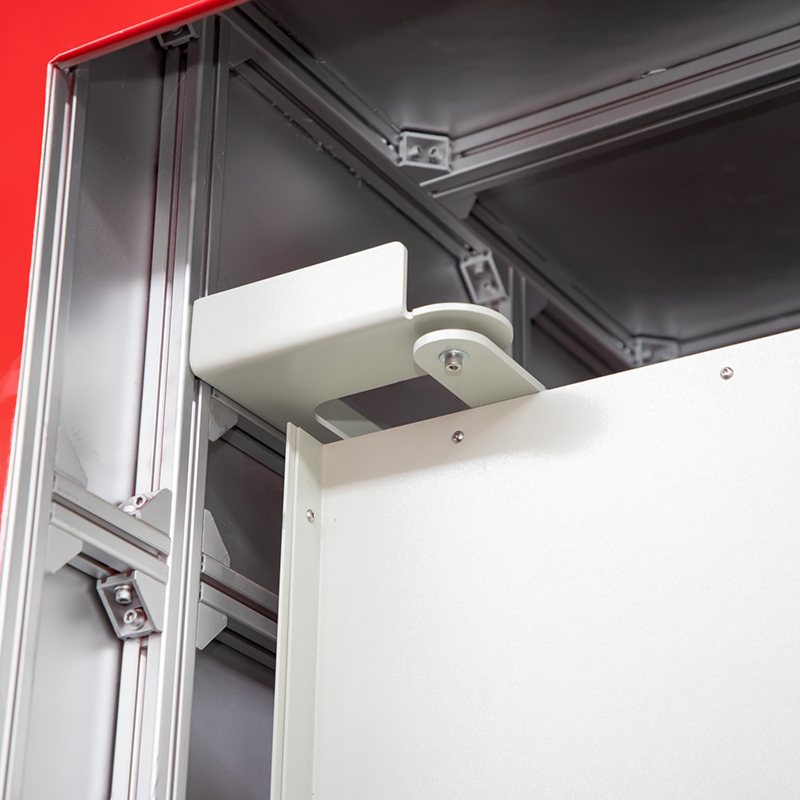 Fire Truck Rotating TrayThe product features a two-stage rotating bracket (90° / 115°).View Product →
Water hose storage racks
Hose is the most expensive consumable in most compartments and the easiest to damage. A rack should support the coil or bundle over a wide contact area, drain freely so water does not sit against the jacket, and present the coupling at a height a firefighter can reach without lifting the whole load.
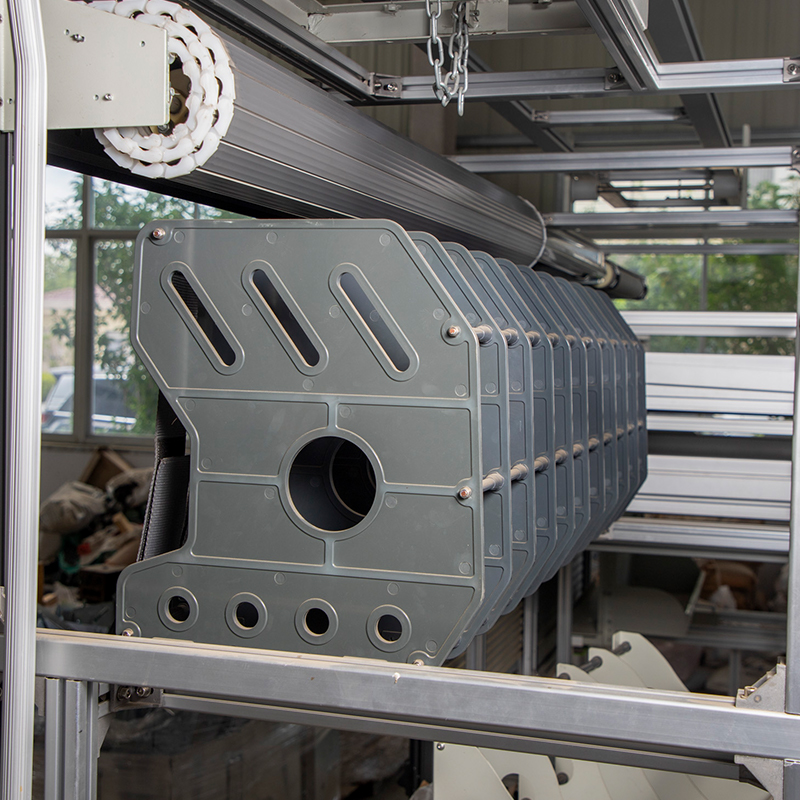 Fire Truck Water Hose Storage RackThe water hose partition is a specially designed device for efficiently managing fire hoses. Using this device not only increases work efficiency but also provides a n...View Product →
Matching the System to What You Actually Carry
Start with a load list, not a catalogue. Weigh or estimate every item that will live in each bay, note its longest dimension and how often it is used, then allocate hardware. The split below is a common starting point for a general-purpose pumper bay.
- Fire hose 30%
- Hand tools 25%
- SCBA and PPE 20%
- Nozzles 15%
- Other 10%
Figure 2 - Illustrative distribution of compartment volume for a general-purpose pumper. Adjust to your own load list.
| Component | Typical load | Spec to verify | Common procurement risk |
|---|---|---|---|
| Drawer | 40 to 150 kg | Rated load at full extension, latch force, cycle test | Rating quoted for the closed position only |
| Horizontal tray | 60 to 120 kg | 100 percent against 75 percent travel, end stop, drainage | Tray fouls the door lip or latch when fully out |
| Rotating tray | 40 to 100 kg | Swing clearance, detent, bearing type | Blocked by wheel arch, reel or deployed step |
| Hose storage rack | 60 to 150 kg | Bend radius, drainage, edge treatment | Water pools against the jacket; edges chafe the hose |
| Brackets and straps | 5 to 30 kg each | Webbing rating, quick release, grip in gloves | Straps hard to release with gloves; adhesive pads soften in heat |
Weight, Travel and Corrosion: The Details That Decide Service Life
Three numbers separate a system that lasts from one that rattles itself loose.
- Rated load at full extension. Ask for it explicitly. A slide rated at 120 kg closed may be rated at 50 kg fully out, because the moment arm grows with travel. Design for dynamic loads of roughly two to three times the static weight to cover braking and potholes.
- Travel and stop position. Full extension is not always better. On a narrow street, a tray that extends 100 percent can block the walking lane. Full extension with a positive stop is the right choice for dense bays; 75 percent is often enough for long items accessed from both sides.
- Material and finish. Wet hose bays favour 304 stainless steel fasteners and hardware; dry tool bays can use aluminium to save weight. Where dissimilar metals touch, isolate them or expect galvanic corrosion at the fastener within a few seasons.
Also ask about cyclic testing, salt spray hours and the type of slide bearing used. Roller bearings tolerate heavy loads and grit well; plain bearings run quieter but demand clean compartments. Either works if the specification matches the environment.
New Build or Retrofit: What Changes
Retrofitting is practical and common, but it follows different rules from a factory installation. Wall thickness and internal framing determine where a slide can be anchored, so a backing plate is often required. Weight added to the body reduces remaining payload, which matters if the apparatus is already near its axle rating. Electrical releases and locks need a feed and a fuse. Measure the bay in three dimensions, including the door swing and the latch, before ordering anything.
A short checklist keeps a retrofit on schedule: confirm anchor points with a stud finder or the body builder's drawings; check the swing and travel in the empty bay; weigh the loaded tray before installation; and test the release with heavy gloves on, in the dark, before the truck returns to service.
Frequently Asked Questions
Can a stowage system be fitted to a truck already in service?
Yes. Most drawers, trays and racks can be retrofitted if the compartment has sound framing or can accept a backing plate. Allow extra time for measuring and for any electrical work on locking mechanisms.
What load rating should I request?
Request the rated load at full extension, plus the test standard behind it. If a supplier quotes only a closed-position figure, treat it as a starting point and ask for the extended figure in writing.
Stainless steel or aluminium?
Stainless steel for wet hose compartments, decontamination areas and coastal service. Aluminium for dry tool bays where weight saving matters. Match the fasteners to the structure to avoid galvanic corrosion.
Do sliding systems need maintenance?
An annual check of fasteners, latches and slides is usually enough. Clean grit out of roller slides, confirm the end stop still engages, and replace worn webbing before it fails under load.
How do I qualify a supplier?
Look for a documented quality system such as ISO 9001 or GB/T 19001, a stated rated load for each product, and the ability to supply the whole compartment plan rather than a single bay.
Build a Compartment That Works as Fast as Your Crew
Stowage is one of the few parts of a fire apparatus specification where a modest budget change produces a daily, measurable result. Decide what each bay must carry, put the load rating and travel in writing, and check the swing and clearance before anyone drills a hole. Do that, and the equipment comes out as fast on the five hundredth call as it did on the first.
If you are planning a compartment layout or upgrading a truck already in service, send us your load list and bay dimensions and we will help match components to the space you have.
News
-
-
A firefighter opens a compartment door after a long working fire. Inside, the thermal imaging camera has slid under a halligan bar, the hose line is twisted into a knot, and a 20 kg SCBA cylinder is ...
READ MORE -
A builder fitting out a pumper asks one question before ordering anything: fixed deck monitor or portable cannon? The answer should follow the attack, not the catalog. A fire hose cannon earns its p...
READ MORE -
Specification meetings usually park the ladder rack near the bottom of the option sheet, a few lines above the license plate bracket. That is also why ladder racks become the complaint in year three:...
READ MORE -
Quick Answer The right fire truck boarding ladder is a fixed, upward-folding, or rotating step assembly mounted at the rear or side of the apparatus that gives firefighters a stable, non-slip surface ...
READ MORE -
Fire truck ladder racks are roof-mounted storage and deployment systems that hold ground ladders securely in transit and let firefighters lower them to the side or rear of the apparatus in seconds. ...
READ MORE
Hey! Interested in staying in the loop? Sign up for our updates.
WE WON'T SPAM YOU, PINKY PROMISE.

Tianchang Jinlv Fire Equipment Co., Ltd.
Copyright © Tianchang Jinlv Fire Equipment Co., Ltd. All rights reserved. Custom Fire Truck Equipment Supplier Fire Apparatus Parts Factory
