

 en
 English
 русский
 Español
 عربى
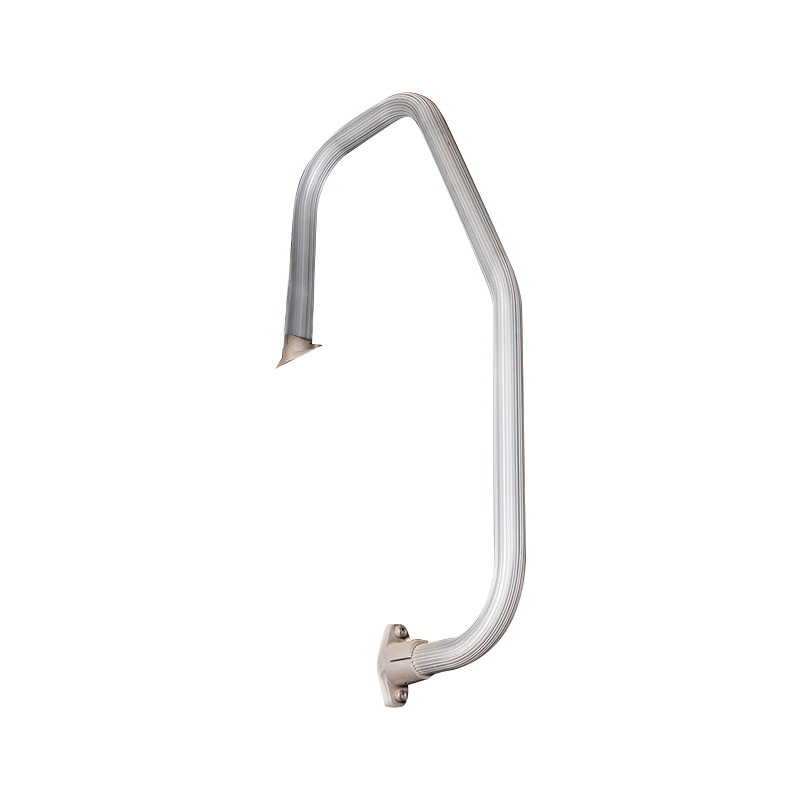
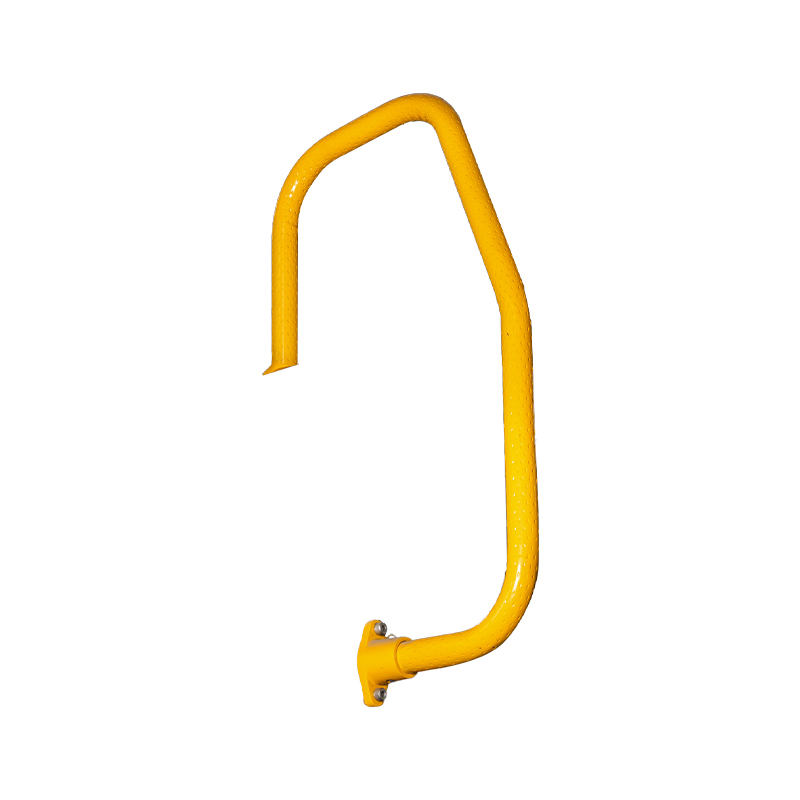
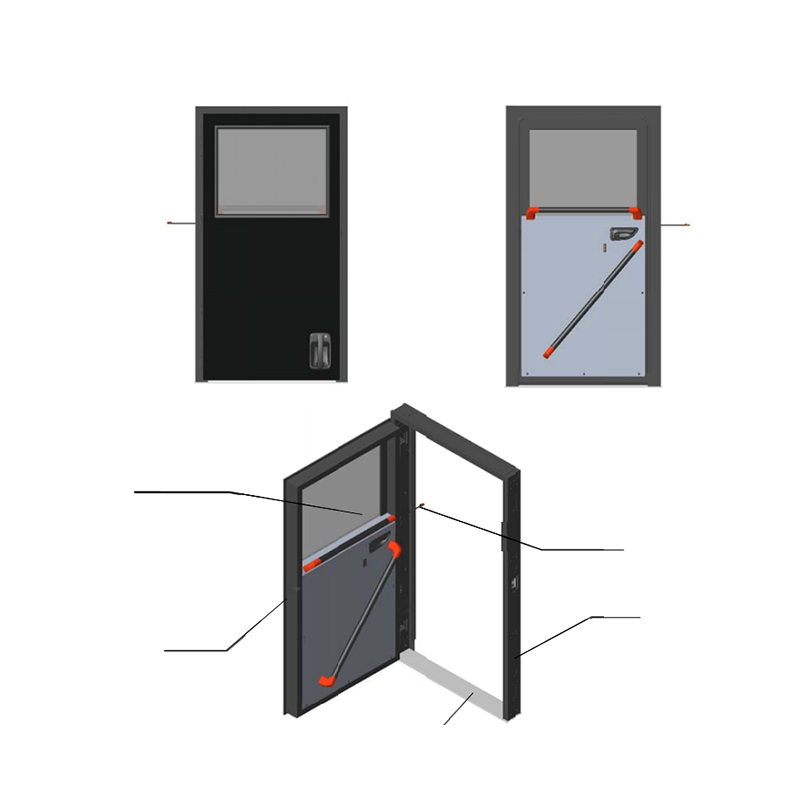


Two pumpers of the same model can feel like two different trucks on the same call. On the first, a firefighter reaches into a compartment, releases one latch with a gloved hand, and pulls a tray far ...
READ MORE
Fire Apparatus Equipment Stowage: Compartment Systems That Keep Crews Fast and Safe
2026.09.18
Content
Every firefighter has opened a compartment door after a rough response only to find nozzles, webbing, and wrenches piled on top of each other. In gloves and low light, with the pump running, that is not the time to rediscover your stowage layout. Organized compartments are a performance factor, not a housekeeping preference. NFPA 1901 requires pumpers, aerials, quints, and mobile foam apparatus to provide at least 40 cubic feet of dedicated equipment storage, and the way that space is divided and accessed determines how quickly a crew can grab the right tool. This article breaks down the main stowage formats, the planning decisions that matter, and the manufacturing quality points worth checking when you spec a new apparatus or retrofit an existing one.
Why Stowage Design Affects Fireground Performance
The conclusion first: equipment stowage is a performance issue, not a housekeeping issue. Three mechanisms explain why.
First, response speed. A full-extension drawer or pullout tray puts every tool within a single gloved reach. The same tool buried under other equipment can take 30 seconds or more to extract. On a working fire, 30 seconds changes the outcome.
Second, tool life. Compartments that allow tools to slide, knock, and vibrate against each other destroy edges, threads, and lenses. Fire apparatus covers thousands of miles between incidents, and road vibration does more damage to loosely stowed tools than most training evolutions.
Third, crew safety. Unsecured tools become projectiles in a collision or sudden braking. Heavy items stowed at shoulder height create lifting injuries, and cluttered compartments hide damage — a cracked fitting or fatigued handle may go unnoticed until it fails at the worst moment.
NFPA sets the space requirement but deliberately leaves the layout to the buyer. Departments that plan their compartments consistently report faster setup times and fewer equipment repairs.
The Core Stowage Formats
Most well-organized apparatus compartments combine a small set of proven formats.
- Drawers for hand tools, nozzles, adapters, and small fittings
- Pullout horizontal trays for larger and heavier items
- Pullout vertical trays for tall tools such as pike poles and hooks
- Rotating trays for corner compartments and floor-mounted access
- Hose storage racks for attack and supply line management
Drawers are the workhorses of the compartment. A full-extension drawer with a load-rated slide lets a firefighter see the entire contents at once, without kneeling, reaching, or sweeping a gloved hand into a dark void.
 Customizable Fire Truck Drawer System with Aluminum Alloy FrameThis drawer unit offers single, double, or multi-layer configurations with silent bearings and a one-hand release handle, making it a practical choice for organizing fire suits, helmets, and rescue gear.View Product →
Pullout horizontal trays handle the heavy end of the inventory — irons, fans, hydraulic rescue tools, and hazmat kits. Mounted to the compartment floor, they roll forward on heavy-duty slides so the weight is presented to the firefighter rather than requiring a reach-and-drag from deep inside the compartment.
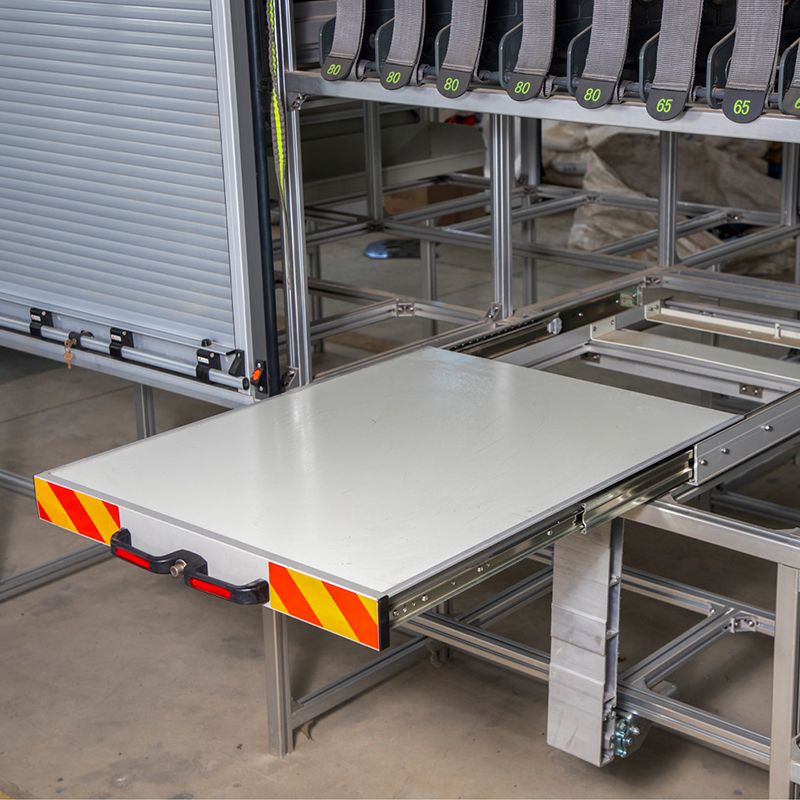 Heavy-Duty Pull-Out Horizontal Tray for Fire Truck CompartmentsMounted to the compartment floor, this tray rolls forward on quiet 200kg-rated slides, ideal for presenting heavy items like generators, pumps, and rescue tools without deep reaching.View Product →
Pullout vertical trays suit long tools that are awkward to extract from standard shelves. The crew pulls the tray outward, then lifts the tool straight up, keeping poles and hooks clear of surrounding gear.
Rotating trays make the most of corner compartments and floor locations where a fixed drawer is impractical. A turntable base brings rear-mounted equipment to the front of the opening, which pays off on compartments with access from both sides of the vehicle.
A hose storage rack keeps attack and supply hose bundled, off the floor, and tangle-free. Individual bays prevent the hose from migrating during transport and allow each line to be pulled independently.
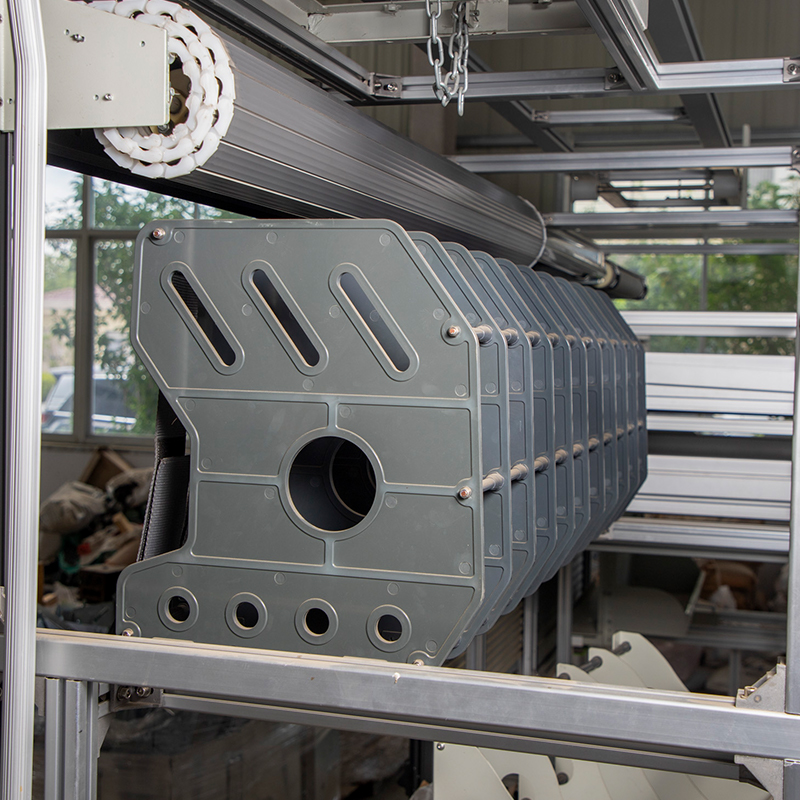 Fire Hose Storage Rack with Modular PVC PartitionsThis injection-molded PVC partition system keeps 40/65/80mm hoses neatly separated and tangle-free, with a customizable layout that improves compartment organization and quick access.View Product →
| Stowage format | Typical contents | Access motion | Typical load range |
|---|---|---|---|
| Drawer | Nozzles, wrenches, fittings | Full extension, top-down | 40–100 lb |
| Horizontal tray | Irons, fans, rescue tools | Pull out, lift out | 80–250 lb |
| Vertical tray | Pike poles, hooks, masts | Pull out, vertical lift | 30–120 lb |
| Rotating tray | Mixed small gear | Rotate, then reach | 50–150 lb |
| Hose rack | Attack and supply hose | Front or side pull | 50–200 lb |
Planning the Layout Before Choosing Hardware
The hardware is only as good as the layout plan. Three rules cover most departments.
First, organize by frequency of use. Items accessed on every call — irons, nozzles, radios, thermal imagers — belong at waist height in full-extension drawers. Seasonal or rarely used gear belongs in less accessible positions.
Second, manage weight deliberately. Keep heavy items low and close to the vehicle centerline. A fully loaded horizontal tray adds substantial weight to one side, which changes handling and can push an axle beyond its rating.
Third, test with gloved hands. Pull handles, clearances, and latch operation should be verified in full turnout gear, not in a quiet office. The best layout in a CAD model still needs to work when visibility is low and adrenaline is high.
Illustrative figures based on common compartment drill observations.
Materials, Slides, and Manufacturing Consistency
Fleet purchasers often focus on the compartment box and forget that the stowage hardware must survive the same vibration, salt, humidity, and temperature range as the rest of the apparatus.
Corrosion resistance matters first. Aluminum and stainless steel components resist the moisture and road chemicals that attack untreated steel. Powder-coated carbon steel is an economical alternative, but the coating must be inspected and repaired when scratched.
Slide quality determines both lifespan and daily usability. Load-rated slides with locking detents prevent drawers from creeping open during transit, and in a collision, a locked slide keeps a heavy drawer from becoming a projectile.
Manufacturing consistency is what makes fleet installations predictable. A manufacturer operating under a documented quality system such as GB/T19001-2016 produces parts with consistent tolerances, which simplifies installation across multiple vehicles and avoids fitment surprises at the body builder.
- Hose storage (30%)
- Hand tools & nozzles (25%)
- SCBA & PPE (20%)
- Power & hydraulic tools (15%)
- Spares & consumables (10%)
Illustrative allocation for a typical pumper compartment set; actual layout depends on department role.
Stowage in the Broader Apparatus System
Equipment stowage does not live in isolation. Boarding ladders, cab doors, and roller shutters all affect how quickly crew members reach tools and how well the compartment protects them. The same planning discipline — material selection, load tolerance, access mechanics — applies across the whole vehicle.
For departments specifying complete solutions, the fire apparatus equipment stowage and mounting systems category covers drawer, tray, rack, and rotating hardware that works with existing compartment dimensions.
Frequently Asked Questions
Does NFPA require a minimum amount of equipment storage space?
Yes. NFPA 1901 requires pumpers, aerials, quints, and mobile foam apparatus to provide at least 40 cubic feet of equipment storage. The standard sets the minimum space, not the layout or hardware choice.
Can existing compartments be retrofitted with pullout trays and drawers?
In most cases, yes. Pullout trays and drawers mount to the compartment floor, walls, or slide rails, so retrofitting is common. Verify the compartment depth, height, and structural mounting points before ordering.
What is the best material for stowage components?
Aluminum and stainless steel offer the best corrosion resistance for fire apparatus service. Coated carbon steel is more economical, but the coating must be maintained.
How much weight can a pullout tray hold?
It depends on the model and slide rating. Typical horizontal trays are rated from 80 to 250 pounds. Check the manufacturer rating and account for road vibration loads.
Plan the Space, Then Build the Compartment
Fire apparatus equipment stowage decides how fast your crew gets the right tool off the truck and how long that tool stays serviceable. Start with the NFPA minimum of 40 cubic feet, plan around frequency of use and weight distribution, and choose hardware with load-rated slides, corrosion-resistant materials, and consistent manufacturing quality. A well-organized compartment is a force multiplier, not a feature. To review specific drawer, tray, and rack configurations, contact our team with your compartment drawings and tool inventory.
News
-
-
A firefighter opens a compartment door after a long working fire. Inside, the thermal imaging camera has slid under a halligan bar, the hose line is twisted into a knot, and a 20 kg SCBA cylinder is ...
READ MORE -
Specification meetings usually park the ladder rack near the bottom of the option sheet, a few lines above the license plate bracket. That is also why ladder racks become the complaint in year three:...
READ MORE -
Two minutes into a working fire, a crew stands in front of a locked steel security door with a crowbar that is too short to pull with both hands. Nothing about the tool is broken. It was simply speci...
READ MORE -
A builder fitting out a pumper asks one question before ordering anything: fixed deck monitor or portable cannon? The answer should follow the attack, not the catalog. A fire hose cannon earns its p...
READ MORE
Hey! Interested in staying in the loop? Sign up for our updates.
WE WON'T SPAM YOU, PINKY PROMISE.

Tianchang Jinlv Fire Equipment Co., Ltd.
Copyright © Tianchang Jinlv Fire Equipment Co., Ltd. All rights reserved. Custom Fire Truck Equipment Supplier Fire Apparatus Parts Factory
