

 en
 English
 русский
 Español
 عربى
Every firefighter has opened a compartment door after a rough response only to find nozzles, webbing, and wrenches piled on top of each other. In gloves and low light, with the pump running, that is ...
READ MORE
Fire Demolition Tools: Wrench, Axe and Crowbar Selection for Fire Trucks
2026.10.09
Content
Two minutes into a working fire, a crew stands in front of a locked steel security door with a crowbar that is too short to pull with both hands. Nothing about the tool is broken. It was simply specified for a different job.
That is the daily reality behind fire demolition tools. They cost a fraction of a fire truck, which is exactly why they get ordered last, inspected least and replaced with whatever the local supplier happens to have on the shelf. The symptoms show up on scene as bent claw ends, chipped axe edges and wrenches that round off the first time real torque goes onto a gas valve.
The short version: three variables decide whether a firefighter wrench, axe or crowbar performs — the steel and its heat treatment, the geometry of head and handle, and the way the tool is stored and released in the apparatus bay. Everything below is built around those three variables.
What Counts as a Fire Demolition Tool
Demolition work on the fireground splits into two families. Powered tools such as rotary saws, hydraulic spreaders and rams handle structural breaching. Manual tools handle everything in between: forcing a residential door, lifting a floorboard, opening a panel a spreader cannot reach, or shutting a gas valve before the hose line advances. This article deals with the manual group, because that is the group most departments buy without a written specification.
Three hand tools cover the majority of those tasks, and all three sit in the same product family — the fire demolition tools line that most apparatus builders and fire departments specify together rather than individually.
| Tool | Primary field use | Specification that matters most | Common procurement mistake |
|---|---|---|---|
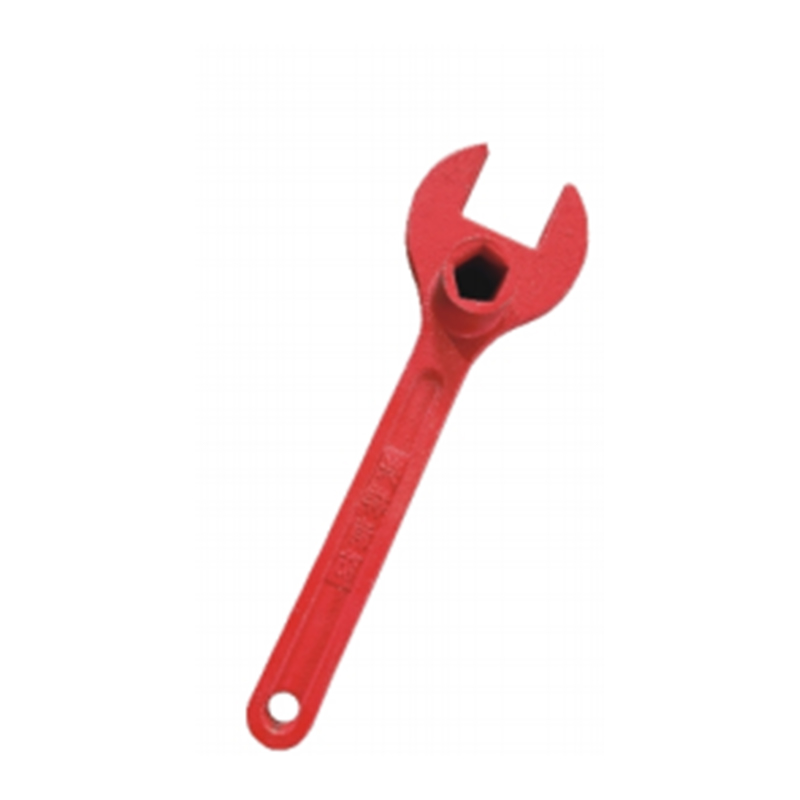
| Firefighter wrench | Shutting gas valves, prying small access panels, tightening hose couplings | Jaw opening, overall length, head thickness | Buying a single compromise size for every valve type |
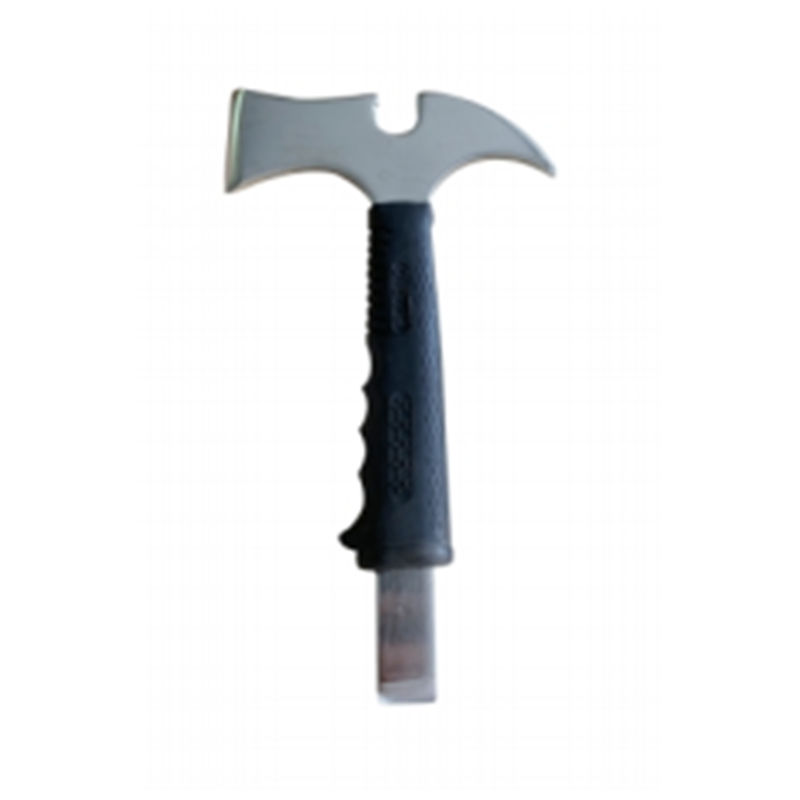
| Firefighting axe | Forcing doors, breaking glazing, cutting through lightweight roof decking | Edge hardness, bit geometry, handle material | Choosing on handle length alone and ignoring bit profile |
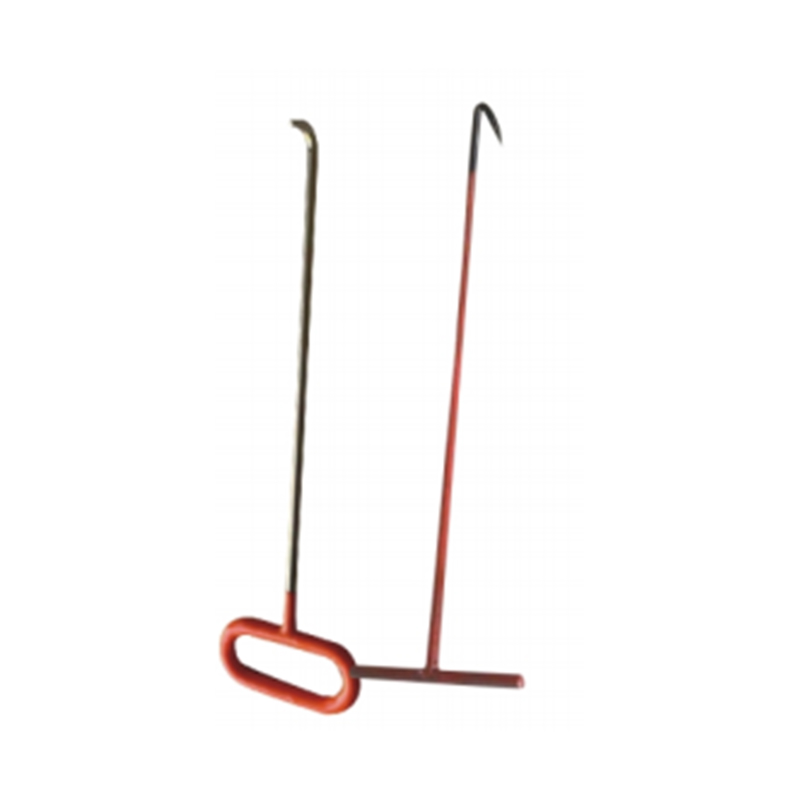
| Firefighting crowbar | Prying doors, lifting floorboards, opening deformed metal and vehicle panels | Overall length, heel and hook shape, bend radius | Ordering a bar too short for two-handed leverage |
A crowbar is the clearest example of how much geometry changes the outcome. A bar that bites cleanly into a door gap and holds its shape under a full pull does more work than a heavier bar with a shallow heel that keeps slipping out of the frame.
 Firefighting Crowbar and Halligan Forcible Entry ToolProfessional firefighting crowbar and Halligan tool for rescue teams; worth reviewing where head shape and length affect prying, striking, and breaching.View Product →
Matching the Wrench, Axe and Crowbar to the Job
Length and head shape decide whether a tool is usable, not the price on the invoice. Here is how the three tools behave in practice.
Firefighter wrench: reach and jaw opening
A firefighter wrench earns its place by reaching where a gloved hand cannot go — gas meter valves, standpipe connections, slotted panel fasteners. Two dimensions decide how useful it is. The jaw opening has to seat on the valve or fastener without slipping, and the overall length has to deliver enough purchase on a stiff stem. A wrench under 25 cm rarely provides that purchase. Departments that carry only one size usually find it too short in the open and too long inside a confined space, so a short and a long version together cover noticeably more calls.
Firefighting axe: edge geometry beats head weight
On the fireground, the axe is a striking and cutting tool rather than a splitting tool. A thin, properly hardened bit opens a metal door skin and cuts through roof decking; a thick, soft bit bounces and leaves the crew hitting the same spot three times. Handle material controls how much impact reaches the user's wrists, and a handle that cannot be re-seated in the field becomes scrap after one loose strike.
Firefighting crowbar: length is the specification
A 60 cm bar is a lifting and trim-prying tool. A 120 to 150 cm bar is what actually opens an outward-swinging commercial door or lifts a section of collapsed slab. The heel and hook profile determines whether the bar bites into a door gap or slides off under load. Buyers who order "a crowbar" without a length and head profile frequently receive something technically functional and practically useless on their own calls.
For crews working forced entry on a regular basis, the axe is usually the first tool upgraded, because a chipped or soft bit affects every strike rather than one specific task.
 Heat-Treated Firefighting Axe for Forcible Entry and VentilationProfessional firefighting axe with heat-treated forged carbon steel head and balanced handle; relevant for crews prioritizing edge durability in forcible entry and ventilation.View Product →
Steel, Heat Treatment and What Fails First
Two failure modes dominate field returns: a chipped edge and a rolled edge. Both trace back to hardness and heat treatment rather than to the steel grade printed on the label. A bit that is too hard resists wear and then fractures on a cold, angled strike. A bit that is too soft deforms and has to be re-dressed after every incident. The usable window is narrow, and holding it consistently is a heat-treatment discipline, not a material claim.
Typical core hardness window per tool type (HRC)
The ranges above are typical windows used by manual-tool makers, not absolute rules. What matters for procurement is that the supplier states a range and can back it with hardness testing rather than a marketing claim. A manufacturer running a documented quality system — our own plant works to GB/T19001-2016 from raw material intake through final inspection — can produce that record on request, which is also visible in the way the factory documents each production stage.
Handle attachment deserves the same scrutiny. A head that is mechanically wedged and pinned will not fly off after repeated impact; a head held by friction alone eventually will.
Stowage: The Half of the Specification Nobody Writes Down
Every tool in this article has to survive the drive to the call before it does any work. A 150 cm crowbar that slides across the compartment under braking is both a safety issue and a time loss, because the crew spends the first thirty seconds on scene hunting for it. Stowage systems solve that by fixing a defined position for each tool and releasing it with one hand.
Demolition tools zone
Hose and coupling zone
Nozzle and monitor zone
Breathing apparatus zone
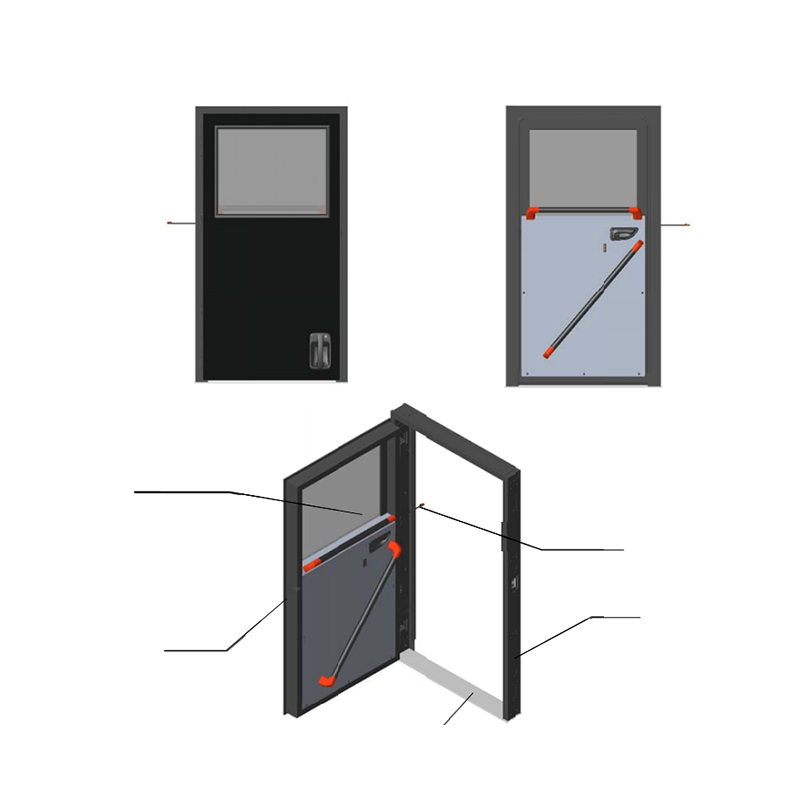
The layout above is a planning sketch, not a fixed rule. What it illustrates is that demolition tools deserve a dedicated zone rather than whatever space is left over. In practice that zone is built from pull-out drawers, horizontal trays, vertical trays and rotating trays, all of which keep heavy steel from moving while giving a gloved hand a clear release path.
Three checks decide whether a stowage unit will hold up: the locking mechanism has to stay engaged over rough roads, the slide has to carry the loaded weight of steel tools without sagging, and the release has to work with one hand while the other holds a flashlight.
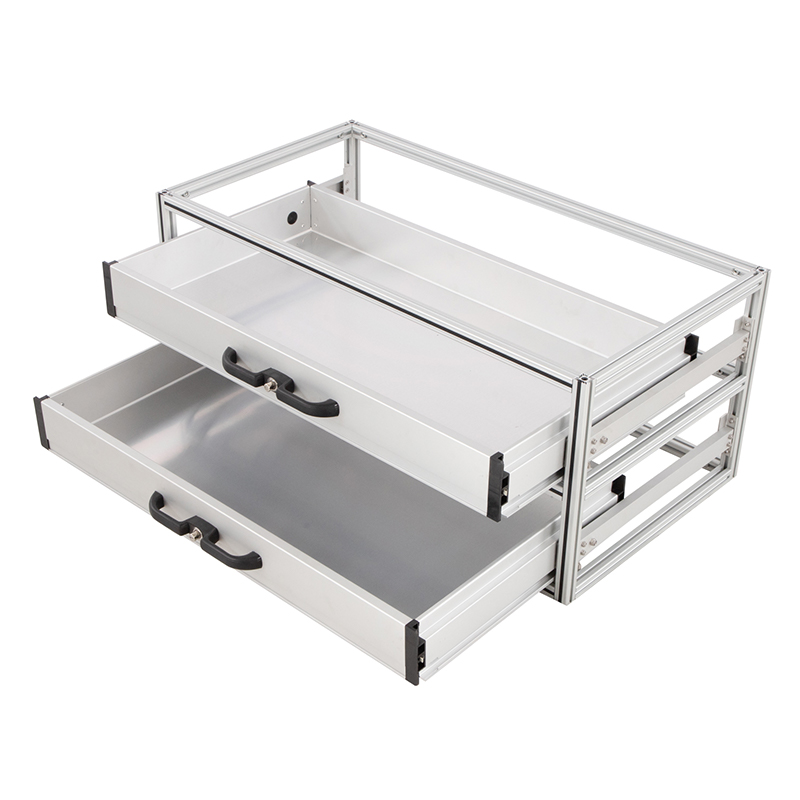 Customizable Fire Truck Drawer for Apparatus Equipment StowageAluminum-frame fire apparatus storage drawer with stainless fasteners, silent-bearing slides and one-hand operation; relevant where locking, load support and release matter.View Product →
A Practical Procurement Checklist
Use these six points before signing off on a demolition tool order. Each one has a direct cost attached if it is skipped.
- Review the last three forcible-entry calls your department ran and note which tool was used and where it fell short.
- Measure the door gaps, recessed valves and access panels your crews actually meet, then convert those measurements into minimum lengths and jaw openings.
- Ask for the hardness range and heat-treatment method in writing, together with the inspection record for the delivered batch.
- Match storage to access speed: a drawer or tray that releases one-handed is worth more than a larger compartment that requires two.
- Order one spare of the tool used most often, so a damaged edge does not take an apparatus out of service.
- Confirm the supplier's quality system and its scope, since a certificate that does not cover the relevant production line proves very little.
Frequently Asked Questions
What hardness should a fire axe edge be?
Most manual tool makers work in a core window of roughly 48 to 55 HRC for the bit, with the striking area left softer to absorb impact. The exact figure matters less than consistency across the batch and the ability to prove it with a test record.
How long should a firefighting crowbar be?
For interior lifting and trim work, 60 cm is enough. For outward-swinging commercial doors, collapsed slabs and vehicle panels, 120 to 150 cm is the working range, because the crew needs two-handed leverage rather than reach.
Do demolition tools need different storage from other equipment?
They need a defined position rather than a dedicated material. Steel tools are heavy and dense, so the storage unit must hold the loaded weight without sagging and keep the tool locked in place under braking and cornering.
What should a supplier provide with a tool order?
At minimum: dimensions, material specification, hardness range, heat-treatment method and the quality system the tool was produced under. Where the tool is part of a stowage system, ask for the load rating of the drawer or tray as well.
Fire demolition tools are not complicated equipment, which is precisely why they get specified badly. A crowbar is judged by its length and heel shape, an axe by its edge geometry and heat treatment, a wrench by jaw opening and reach. Add a stowage position that releases one-handed under load, and the same three tools stop being the items nobody checked and start being the items the crew reaches for first.
News
-
-
Two pumpers of the same model can feel like two different trucks on the same call. On the first, a firefighter reaches into a compartment, releases one latch with a gloved hand, and pulls a tray far ...
READ MORE -
Specification meetings usually park the ladder rack near the bottom of the option sheet, a few lines above the license plate bracket. That is also why ladder racks become the complaint in year three:...
READ MORE -
A builder fitting out a pumper asks one question before ordering anything: fixed deck monitor or portable cannon? The answer should follow the attack, not the catalog. A fire hose cannon earns its p...
READ MORE -
Quick Answer The right fire truck boarding ladder is a fixed, upward-folding, or rotating step assembly mounted at the rear or side of the apparatus that gives firefighters a stable, non-slip surface ...
READ MORE -
Fire truck ladder racks are roof-mounted storage and deployment systems that hold ground ladders securely in transit and let firefighters lower them to the side or rear of the apparatus in seconds. ...
READ MORE
Hey! Interested in staying in the loop? Sign up for our updates.
WE WON'T SPAM YOU, PINKY PROMISE.

Tianchang Jinlv Fire Equipment Co., Ltd.
Copyright © Tianchang Jinlv Fire Equipment Co., Ltd. All rights reserved. Custom Fire Truck Equipment Supplier Fire Apparatus Parts Factory
