

 en
 English
 русский
 Español
 عربى


Three rungs up the rear of a pumper, a firefighter in wet gloves misses the grab and catches the handrail instead. Whether that rail holds was decided months earlier, at the bench: by tube wall thick...
READ MORE
Fire Truck Roller Door Stuck: Causes, Safe Fixes, and Replacement Specs
2026.11.06
Content
- 1 Diagnose in the Right Order, Before Anyone Reaches for a Pry Bar
- 2 Six Faults Behind Almost Every Stuck Shutter
- 3 Manual Release: The Step Crews Skip Under Pressure
- 4 Inside the Barrel: Where Electric Shutters Fail
- 5 Repair or Replace? Four Numbers That Decide It
- 6 Specification Details That Prevent the Next Jam
- 7 A Maintenance Routine That Actually Gets Done
- 8 Questions Crews Ask About Stuck Shutters
It is 02:40, the truck is backed into the bay, and the rear compartment shutter stops about thirty centimetres up and will not move. Inside are the rescue tools for the next call. That is the moment a stuck fire truck roller door stops being a nuisance and starts costing a shift.
The short answer: most jammed shutters are a rail, spring, or release problem, not a motor problem, and nearly all of them can be diagnosed without force. When a door has to be pried, the damage usually costs more than the part that actually failed. What follows is the check order that works, the faults worth recognising by symptom, and the specification details that keep a shutter working after years of vibration, road salt, and foam residue.
Diagnose in the Right Order, Before Anyone Reaches for a Pry Bar
Stop the truck, chock the wheels, and treat the curtain as a loaded spring until you have proved it is not. A roller shutter is balanced by torsion springs, and when a cable or spring lets go, the curtain can drop or run up the rails faster than anyone can step aside.
- Neutralise the vehicle. Parking brake on, ignition off, and the door circuit isolated so nobody cycles the switch while your hands are in the rail.
- Try the manual release. If the curtain moves freely by hand after release, the fault is electrical. If it does not, stay with the mechanism.
- Inspect both guide rails. Gravel, ice, dried foam, a bent rail from a bay impact, or a loose seal all leave a bright scrape mark on one side.
- Test the balance. Lift the curtain a third of the way and let go. It should hold position. If it drops, spring tension or a cable is wrong; if it runs up, the spring is over-wound. Stop and tag it.
- Only then check power. Battery voltage, the door breaker, fuses, and the key switch. A shutter that works with the engine running and fails with it off has a voltage problem, not a door problem.
Prying a balanced curtain out of its rails can release stored spring energy, bend the rails beyond reuse, and tear slats — three failures where there was one. If access is genuinely urgent, use a secondary compartment or remove the bottom rail the way the manufacturer describes.
Six Faults Behind Almost Every Stuck Shutter
Once the truck is safe, the symptom usually names the fault. Advice written for building roll-up doors only partly transfers to apparatus, because a fire truck shutter lives with continuous vibration, salted winters, and a spring pack sized for a moving vehicle.
| Fault | What you notice | First action | If ignored |
|---|---|---|---|
| Debris or ice in the rails | Rises a few centimetres, stalls, scrapes on one side | Brush or vacuum the rails, de-ice before moving | Seal damage, motor straining against a jam |
| Bent rail or worn end shoe | Binds at the same point of travel every time | Compare left and right clearance at half travel | Curtain jumps the track and drops |
| Spring or cable failure | Suddenly heavy, drops fast, will not hold half height | Stop, tag out, call trained service | Uncontrolled descent and injury |
| Limit switch or torque drift | Stops short, reverses, motor hums without moving | Reset limits to the OEM procedure | Burned motor, blown fuse, flat battery |
| Control circuit or low voltage | No response to the switch, works with engine running | Load-test the battery, check connectors | Door that fails exactly when needed |
| Latch or lock misalignment | Key turns, handle moves, door will not release | Adjust the latch rod, inspect for impact damage | Crew locked out of a sealed compartment |
Lubrication deserves its own warning. Grease in a guide rail collects grit and becomes an abrasive paste; most shutter makers specify a dry lubricant or none at all. Clean a dry rail, do not coat it.
Manual Release: The Step Crews Skip Under Pressure
A manual release is only useful if the crew knows where it is. On most electric shutters it is a lever behind the header panel, a chain loop, or a crank socket, and on a truck in service for years it is often seized, painted over, or hidden behind a re-mounted bracket.
Test it on every shift check. The curtain should move by hand with light, even resistance; if it moves in jerks, a slat hinge or end shoe is catching. If it will not move at all after release, the drive is still engaged — inspect the linkage instead of forcing the handle.
 Standard Manual Specialty Vehicle Roller ShutterA manually operated specialty-vehicle shutter with aluminum blades, balancing system, and customizable width, height, and colors; suited to compartments avoiding powered release issues.View Product →
Departments that keep meeting the same release problem on the same compartment often move critical storage to a purely mechanical shutter, where there is no drive to disengage and no limit switch to drift.
Inside the Barrel: Where Electric Shutters Fail
If the door moves freely by hand after release but not from the switch, the fault sits in the drive or its controls. Work through these in order:
- Voltage. Motor current climbs as battery voltage falls, so a tired battery turns a slow door into a stalled one.
- Limit switches. Vibration shifts them a few millimetres a year and the door starts stopping short or reversing at the top.
- Torque setting. Too tight trips on a slightly dirty rail; too loose lets the motor strain against the jam.
- Connectors and earths. Salt spray on a rear chassis is brutal on push-fit plugs and earth straps.
- The brake. A dragging motor brake makes the door stiff in both directions and heats the barrel.
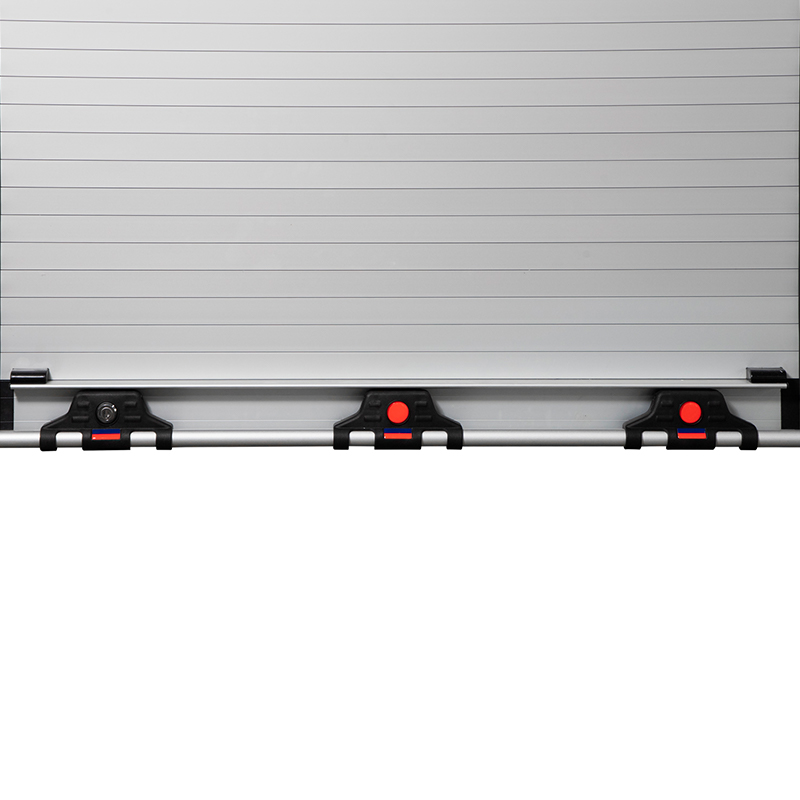 Reinforced Electric Specialty Vehicle Roller ShuttersCustomizable electric roller shutters for specialty vehicles, using reinforced aluminum blades and smooth drive hardware for high-cycle compartments where drive and curtain need extra margin.View Product →
Where a compartment opens a dozen times a shift, both the drive and the curtain hardware need margin. A reinforced electric shutter is built for that cycle count, with heavier slats and stronger end hardware that resist the flexing which quietly walks lighter curtains out of track.
Repair or Replace? Four Numbers That Decide It
Replacing a shutter is not always the cheap answer, but repeated repairs usually hide a specification problem. Score the door on four points before spending again.
- Jams per year. More than two unplanned jams on the same door is a pattern, not bad luck.
- Corrosion and deformation. Pitted rails, oval end shoes, or slats that no longer sit flat cannot be adjusted back into tolerance.
- Parts lead time. If a spring or drive takes weeks to arrive, the truck is out of service for weeks.
- Downtime cost. Compare one lost shift against the price gap between a light and a heavy-duty door.
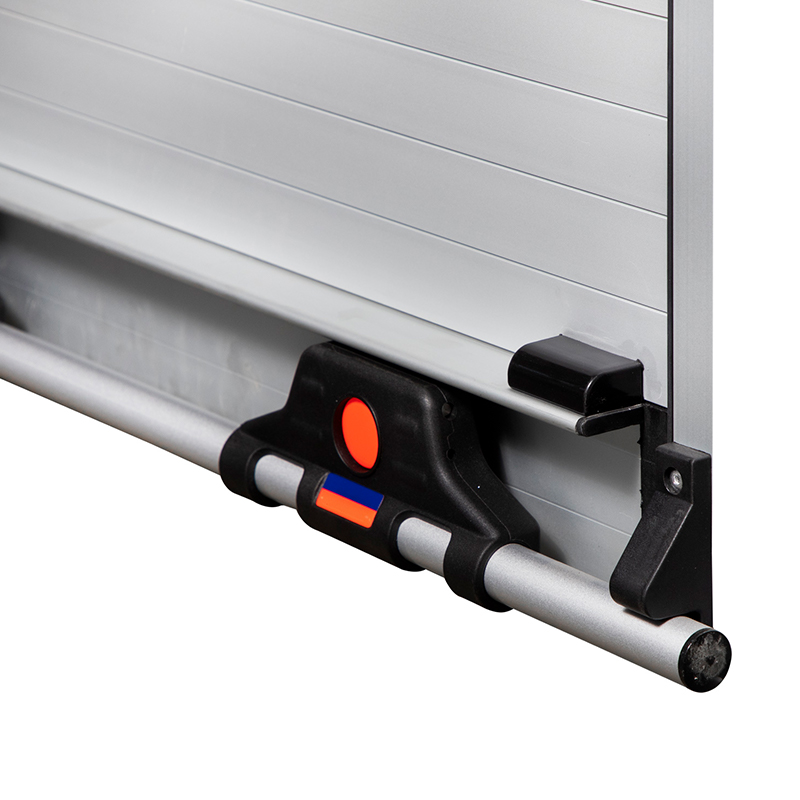 Reinforced Manual Specialty Vehicle Roller ShutterA manually operated specialty-vehicle shutter with reinforced aluminum blades and customizable dimensions, for high-cycle compartments where a light original door needs a stronger manual replacement.View Product →
A reinforced manual shutter is often the fix for a high-cycle compartment where the original door was simply too light: curtain, rails, and latch are sized for the load, and there is no actuator to misbehave. Matching a replacement to an existing opening rather than a nominal size depends on how the parts are made and checked — the factory page covers that process from incoming material to final inspection.
Specification Details That Prevent the Next Jam
Most stuck doors were predictable before the truck was built. Ask about these points, not just the opening size:
- Rail material and thickness. Thin rails flex under curtain load and stay bent after an impact.
- End shoe design. Sealed or bushed shoes tolerate grit; open ones grind it into the rail.
- Seal and drainage. A bottom seal that traps water freezes to the sill and glues itself shut.
- Mounting flatness. A body panel that is not flat twists the rails, and the door binds at one end of travel.
- Service access. Springs and limit switches should be reachable without removing the assembly.
State the duty in real terms: openings per shift, what sits behind the door, and whether the truck runs in salted winters or coastal air. If you are matching a replacement to an existing body, send dimensions and photos — the contact page is the fastest route to a fitment answer.
A Maintenance Routine That Actually Gets Done
Shutter maintenance fails for a boring reason: it needs two people and ten minutes. Fold it into checks the crew already runs.
- Each shift: cycle the door once, listen for scraping, confirm it holds at half height.
- Weekly: brush the rails, wipe the bottom seal.
- Monthly: test the manual release, check latch and lock alignment, tighten header fasteners.
- Quarterly: check current draw, limit settings, and rail straightness.
- After any impact: inspect rails and end shoes before cycling again.
Questions Crews Ask About Stuck Shutters
Can we force a jammed shutter open with a pry bar?
Rarely, and never on a spring-balanced curtain. Forcing releases stored energy, bends rails, and tears slats. If access is urgent, use another compartment or remove the bottom rail as the manufacturer describes.
Why does the door only stick in cold weather?
Ice in the rails and a seal frozen to the sill are the usual culprits, with thickened lubricant a distant third. De-ice before cycling; forcing a frozen door is how motors and cables fail.
Manual or electric for a new build?
Match it to use. A compartment opened a few times a shift is fine manual; one opened constantly, or awkward to reach, justifies electric with a proven manual release.
A stuck fire truck roller door is usually a maintenance signal rather than a mystery. Clear the rails, test the manual release, and check whether the curtain holds its position — those three checks separate an electrical fault from a mechanical one before anyone loosens a bolt.
When the same door jams twice in a year, stop repairing and look at the rail thickness, end shoes, seal design, and duty rating. That is the point where a properly sized shutter stops generating call-outs and becomes a part the crew never thinks about again.
News
-
-
Every firefighter has opened a compartment door after a rough response only to find nozzles, webbing, and wrenches piled on top of each other. In gloves and low light, with the pump running, that is ...
READ MORE -
Two minutes into a working fire, a crew stands in front of a locked steel security door with a crowbar that is too short to pull with both hands. Nothing about the tool is broken. It was simply speci...
READ MORE -
A builder fitting out a pumper asks one question before ordering anything: fixed deck monitor or portable cannon? The answer should follow the attack, not the catalog. A fire hose cannon earns its p...
READ MORE -
Quick Answer The right fire truck boarding ladder is a fixed, upward-folding, or rotating step assembly mounted at the rear or side of the apparatus that gives firefighters a stable, non-slip surface ...
READ MORE -
Fire truck ladder racks are roof-mounted storage and deployment systems that hold ground ladders securely in transit and let firefighters lower them to the side or rear of the apparatus in seconds. ...
READ MORE
Hey! Interested in staying in the loop? Sign up for our updates.
WE WON'T SPAM YOU, PINKY PROMISE.

Tianchang Jinlv Fire Equipment Co., Ltd.
Copyright © Tianchang Jinlv Fire Equipment Co., Ltd. All rights reserved. Custom Fire Truck Equipment Supplier Fire Apparatus Parts Factory
