

 en
 English
 русский
 Español
 عربى


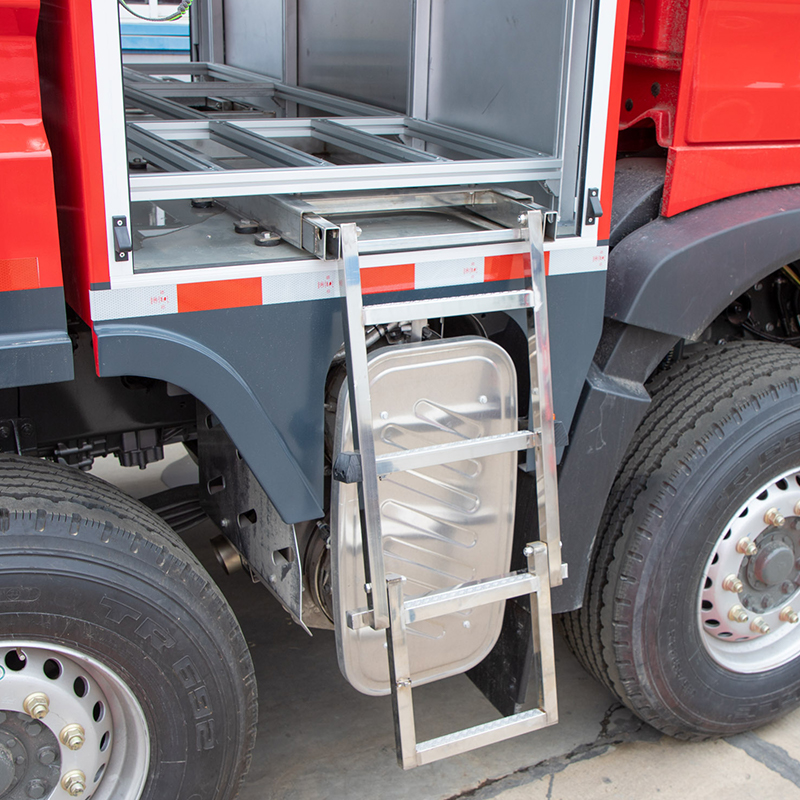
Specification meetings usually park the ladder rack near the bottom of the option sheet, a few lines above the license plate bracket. That is also why ladder racks become the complaint in year three:...
READ MORE
Roller Shutters for Vehicles: Types, Sizes & a Practical Buying Checklist
2026.10.23
Content
- 1 What a Vehicle Roller Shutter Has to Do
- 2 Standard or Reinforced, Manual or Electric
- 3 Manual or Electric Drive: Matching the Shutter to the Mission
- 4 Sizing, Weight and Sealing: The Numbers That Decide Fit
- 5 Procurement Checks Before the Body Is Drilled
- 6 Installation and Maintenance in Service
- 7 Frequently Asked Questions
Most roller shutter problems on fire trucks and specialty vehicles are written into the specification, not worn into the slats. A manual shutter fitted to a compartment the crew opens fifty times a shift, a light-gauge aluminium slat over a pump bay, or a track that ignores how much the body flexes will all give trouble long before the vehicle reaches the end of its service life.
The conclusion first: choose the drive from how often the compartment is opened, choose the slat construction from what the compartment carries, and choose the track and seal from how the body was built. Finish, handle shape and lock style matter far less than those three decisions. The sections below explain how they interact, with the tolerances and limits that usually determine whether an installation is still quiet after five years.
What a Vehicle Roller Shutter Has to Do
A roller shutter on a fire apparatus or specialty vehicle is not a scaled-down warehouse door. It is a moving wall that has to do three jobs at once: close the compartment against water, dust and road spray; hold tools and hose in place while the vehicle is moving; and open in seconds, with a gloved hand, from a position where the operator has no clear line of sight.
That combination explains most of the design choices. Slats are extruded aluminium, anodised rather than painted, because anodising survives abrasion from hose and brackets. Springs and motors are matched to the number of open-and-close cycles expected per shift. Seals are shaped to shed water at the sides, where body and shutter meet, because that joint is the first place a leak appears.
The contents of the compartment shape the specification as much as the body does. Crews loading hand tools, hose and small appliances — the mix that a modern fire department actually carries on its apparatus — put a very different load on a shutter than a utility body holding a single cable reel.
Standard or Reinforced, Manual or Electric
Roller shutters for specialty vehicles are normally built in four combinations: standard or reinforced slat construction, each with manual or electric drive. The two slat grades are not marketing labels. They describe different material thickness and internal reinforcement, which translate into different opening widths and different load limits.
Standard shutters suit compartments roughly a metre wide holding light, frequently handled items. Reinforced shutters are built for wider openings, heavier contents and continuous service, such as pump bays and rescue compartments. When an opening is wider than the standard range for a given slat, stepping up to a reinforced profile is usually cheaper than adding a centre post that the crew will curse.
| Point of comparison | Standard shutter | Reinforced shutter |
|---|---|---|
| Slat construction | Single-wall extruded aluminium, anodised | Double-wall or internally reinforced aluminium |
| Opening width | Typically up to about 1,000 mm per shutter | Wider openings possible without a centre post |
| Drive options | Manual, spring assisted; electric | Manual with heavier spring; electric with higher motor rating |
| Weight | Lower, easy for one person to lift | Higher, as the price of stiffness and impact resistance |
| Best suited to | Light equipment, occasional access, utility and service bodies | Pump bays, rescue and hose compartments, high-cycle access |
| Service focus | Spring tension and track cleanliness | Spring or motor check, slat and seal inspection |
Treat the table as a filter rather than a specification. Width limits are always quoted together with shutter height and body rigidity, so confirm the real figure for your opening before the panels are cut.
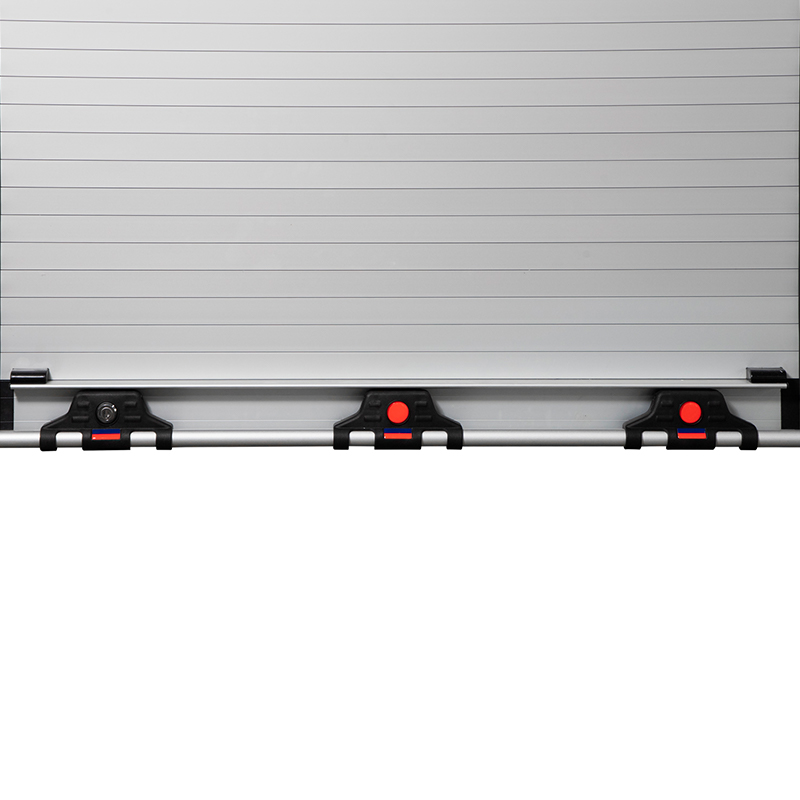 Reinforced Electric Specialty Vehicle Roller ShuttersReinforced electric specialty vehicle roller shutter with customizable W/H, aluminum alloy blades, weather-resistant finishes, and DC 12V/24V or AC 220V motor options.View Product →
Manual or Electric Drive: Matching the Shutter to the Mission
Manual shutters are still the right answer more often than people expect. A spring-assisted manual shutter needs no wiring, no fuse, no isolator and no battery budget, and it cannot fail because a harness was pinched during body assembly. On compartments opened a few times per shift — ladders, long tools, spare equipment — manual operation is simple, light and repairable in the field.
 Standard Manual Specialty Vehicle Roller ShutterSpring-assisted manual specialty vehicle shutter with aluminum alloy blades, no wiring or battery budget, customizable W/H, and smooth, quiet roller operation.View Product →
Electric shutters earn their place where access is frequent or where the operator's hands are full. A pump bay or hose compartment on a busy appliance may be opened dozens of times per shift, and a motor removes both the shoulder work and the temptation to leave the shutter part-open. The real cost is not the motor but the installation discipline: correct cable routing, a properly rated fuse, and a switch placed where passing gear cannot knock it.
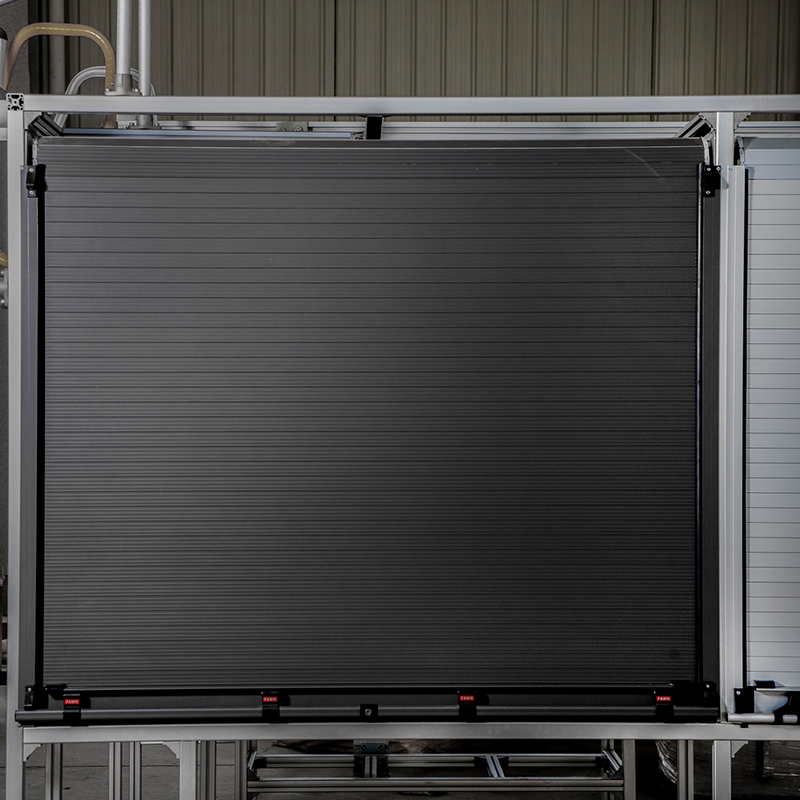 Standard Electric Specialty Vehicle Roller ShuttersElectric specialty vehicle roller shutter for frequent access, with aluminum alloy blades, customizable W/H, DC 12V/24V or AC 220V motor, and smooth, quiet operation.View Product →
Two details decide long-term satisfaction. The first is drive speed: a shutter that opens in six seconds during a demonstration can feel slow at three in the morning, yet a very fast shutter carrying a heavy slat hits its end stops hard and shakes the body. The second is end-of-travel behaviour — good electric units decelerate before the stop, and good manual units have a spring that holds the shutter open without a prop.
Sizing, Weight and Sealing: The Numbers That Decide Fit
Three numbers cause most fitting problems on the production line: opening width, opening height and headroom above the opening. The shutter coils into the top of the frame, so if a shelf, light bar or wiring duct has already been welded in, the coil housing may not fit at all, and no amount of adjustment recovers the difference.
Width has a second constraint. Aluminium slats deflect under their own weight as the opening grows, and deflection shows up as a shutter that rubs one side of the track on a hot day. Budget 10 to 15 mm of clearance on each side for track and seal, and get the tolerance in writing before drilling.
Weight matters twice: it loads the panel that carries the coil housing and track, and it decides whether the shutter is comfortable to operate by hand. A reinforced slat on a wide opening can be perfectly stiff and still too heavy for a spring-assisted manual drive — which is exactly the point where electric drive becomes the sensible choice rather than a luxury.
Sealing is the quiet differentiator between a shutter that lasts three years and one that lasts ten. Look for a side seal that compresses against the track instead of sliding flat along the body, a bottom rail with a real drainage edge, and fixings that let the seal be replaced without removing the shutter.
Procurement Checks Before the Body Is Drilled
Six checks catch most problems while they are still cheap to fix:
- Count cycles. Estimate how many times the compartment is opened per shift and multiply by years of service. Anything above roughly twenty cycles per shift usually justifies electric drive.
- List the load. Include the heaviest single item and the total mass, then compare with the shutter's rated load rather than with what the compartment floor can carry.
- Confirm geometry. Width, height and coil headroom should be agreed before body panels are finalised, with tolerances stated in writing.
- Settle the control details. For electric units, agree switch position, fuse rating, cable route and manual override with the body builder.
- Check materials and finish. Anodised aluminium is the default; confirm the seal resists UV and road salt, and that fasteners are stainless or isolated from dissimilar metals.
- Ask about support. Spare slats, seals and springs, plus the documentation that ships with each unit. A supplier working to a certified process, such as the GB/T19001-2016 system behind our production from raw material to final delivery, is easier to hold to a specification when something changes.
Installation and Maintenance in Service
At installation
Tracks must be parallel and shimmed so the shutter runs without side load; a few tenths of a millimetre of taper is enough to wear a seal on one edge. Check full travel by hand before wiring, set the end stops so the bottom rail seals without compressing the gasket flat, and confirm the spring balances the slat at mid-travel.
In service
Clean tracks before they look dirty — grit is what wears seals and scratches anodised slats. Use a dry or silicone-based lubricant rather than grease, which collects road dust. Replace seals at the first sign of hardening, and have spring tension checked at every major service interval. These three habits are the difference between a ten-year shutter and a five-year one.
Frequently Asked Questions
Can a manual shutter be converted to electric later?
Often yes, but only if the slat weight, coil housing and body structure allow a motor and its wiring route. On heavy reinforced slats the spring is usually too weak, so the conversion can cost more than specifying electric drive from the start.
How wide can a roller shutter be without a centre post?
It depends on shutter height, slat profile and how much the body panel moves. Reinforced profiles allow wider openings than standard ones, but the limit is always confirmed per opening rather than taken from a general catalogue figure.
Do aluminium shutters need painting?
No. Anodising is the standard finish for vehicle shutters because it resists abrasion without a coating that can chip and expose bare metal around handles, latches and brackets.
How long should a shutter last?
On a busy appliance, eight to twelve years is a realistic expectation with normal servicing; low-cycle compartments last longer. Springs and seals are wear items and should be treated as such rather than as lifetime parts.
Roller shutters for vehicles reward a simple decision order: count the cycles, list the load, measure the opening, then choose slat grade and drive. Get those four right and the shutter disappears into the background, which is exactly what a good compartment door should do. Get them wrong and no amount of adjustment at handover will keep it quiet.
News
-
-
When a fire apparatus rolls out of the station for a structure fire or a highway rescue, every bolt, hinge, and ladder surface is about to face heat, vibration, moisture, and rough handling. Some com...
READ MORE -
Two minutes into a working fire, a crew stands in front of a locked steel security door with a crowbar that is too short to pull with both hands. Nothing about the tool is broken. It was simply speci...
READ MORE -
01 Choosing the right fire truck equipment comes down to three things: matching gear to your call volume, verifying it meets NFPA and GB fire apparatus standards, and working with a fire truck equip...
READ MORE -
Key Takeaway The right fire truck boarding ladder comes down to matching the mounting style, ground clearance, and material to your truck class: fixed ladders suit trucks with no clearance limits, f...
READ MORE
Hey! Interested in staying in the loop? Sign up for our updates.
WE WON'T SPAM YOU, PINKY PROMISE.

Tianchang Jinlv Fire Equipment Co., Ltd.
Copyright © Tianchang Jinlv Fire Equipment Co., Ltd. All rights reserved. Custom Fire Truck Equipment Supplier Fire Apparatus Parts Factory
