

 en
en
 English
 русский
 Español
 عربى
عربى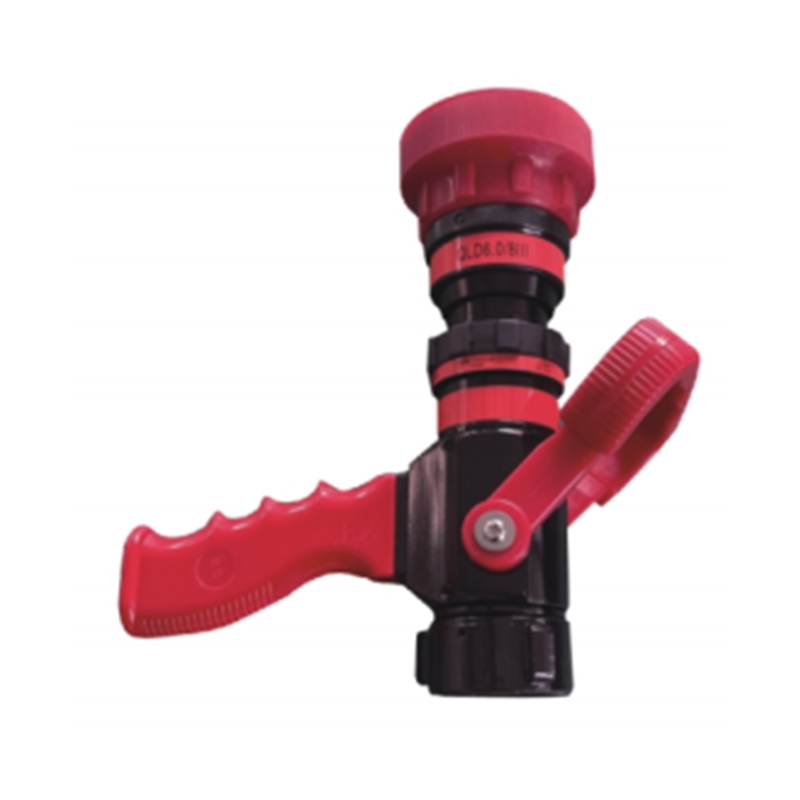


Key Takeaway The right fire truck boarding ladder comes down to matching the mounting style, ground clearance, and material to your truck class: fixed ladders suit trucks with no clearance limits, f...
READ MORE
How to Choose the Right Fire Fighting Nozzles for Your Fire Truck?
2026.08.10
Content
- 1 How to Choose the Right Fire Fighting Nozzle for Your Truck
- 2 Fog Nozzle vs Smooth Bore Nozzle: Which Is Better for Firefighting
- 3 Best Fire Fighting Nozzles for Volunteer Fire Departments
- 4 Adjustable Fog Nozzle vs Fixed Gallonage Nozzle: Which Should You Buy
- 5 Fire Fighting Nozzles for Wildland and Brush Fire Operations
Quick Answer
The right fire fighting nozzle depends on three factors: the flow rate your pump can deliver, the pattern your crew needs on the fireground, and the thread standard your hose already uses. For most engine companies a combination of an adjustable fog nozzle and a fixed gallonage smooth bore nozzle covers the widest range of calls, while volunteer departments and wildland crews each have narrower, more specific needs. Working with an established fire fighting nozzles manufacturer that documents flow testing and supports NH or NST thread options removes most of the guesswork from this decision.
How to Choose the Right Fire Fighting Nozzle for Your Truck
Selecting fire fighting nozzles is not a single decision, it is a matching exercise between three variables: pump output, hose diameter, and the fire scenario a department responds to most often. A nozzle rated for 95 to 125 gallons per minute will underperform on a pumper with a high capacity discharge, while an oversized nozzle can drop pump pressure below the level needed for an effective stream. Before ordering any fire hose nozzles, departments should confirm the rated flow range printed on the nozzle body against the actual discharge pressure of the apparatus pump, not just the nominal pump rating on the truck specification sheet.
Thread compatibility is the second variable that gets overlooked. National Hose thread and National Standard thread are not interchangeable, and a mismatch between a new nozzle and existing hose couplings creates a leak point at the worst possible moment. A reliable fire fighting nozzles supplier will list thread type clearly for every product and offer adapters or custom thread machining for departments running mixed hose inventories from different truck generations.
60-250
Typical flow range in gallons per minute across nozzle types
2
Common thread standards, NH and NST
30-45
Degree fog pattern range on adjustable nozzles
10+
Years of service life for brass and hard anodized aluminum bodies
Material choice affects both weight and corrosion resistance. Hard anodized aluminum keeps the nozzle light enough for one handed operation during an interior attack, while brass construction adds weight but resists corrosion better in coastal or high humidity regions. Departments operating in salt air environments or near marine terminals often specify brass fire fighting nozzles for exactly this reason, accepting the added weight in exchange for a longer service interval before internal components need replacement.
Fog Nozzle vs Smooth Bore Nozzle: Which Is Better for Firefighting
Fog nozzles and smooth bore nozzles solve different problems, and the honest answer to which one is better depends entirely on the attack scenario. A fog nozzle produces an adjustable pattern from a tight straight stream to a wide protective fog, which makes it useful for interior structural attack where crews need to cool overhead gases without disturbing thermal layering. A smooth bore nozzle produces a single solid stream with lower nozzle reaction force and less friction loss at long hose lays, which makes it the preferred choice for master stream applications and exterior defensive operations where reach and penetration matter more than pattern flexibility.
Nozzle Comparison
| Factor | Fog Nozzle | Smooth Bore Nozzle |
| Pattern Control | Adjustable, straight stream to wide fog | Fixed, solid stream only |
| Nozzle Reaction | Higher at wide fog settings | Lower and more predictable |
| Friction Loss | Moderate to higher | Lower over long hose lays |
| Best Use Case | Interior structural attack, ventilation cooling | Master stream, exterior defensive operations |
Field Note
Many engine companies carry both types rather than choosing one over the other. A crosslay preconnected to an adjustable fog nozzle handles the majority of structural calls, while a smooth bore tip stays available for deck gun or portable monitor operations where reach and reduced friction loss matter more than pattern flexibility.
Fire Fighting Nozzles Product Series
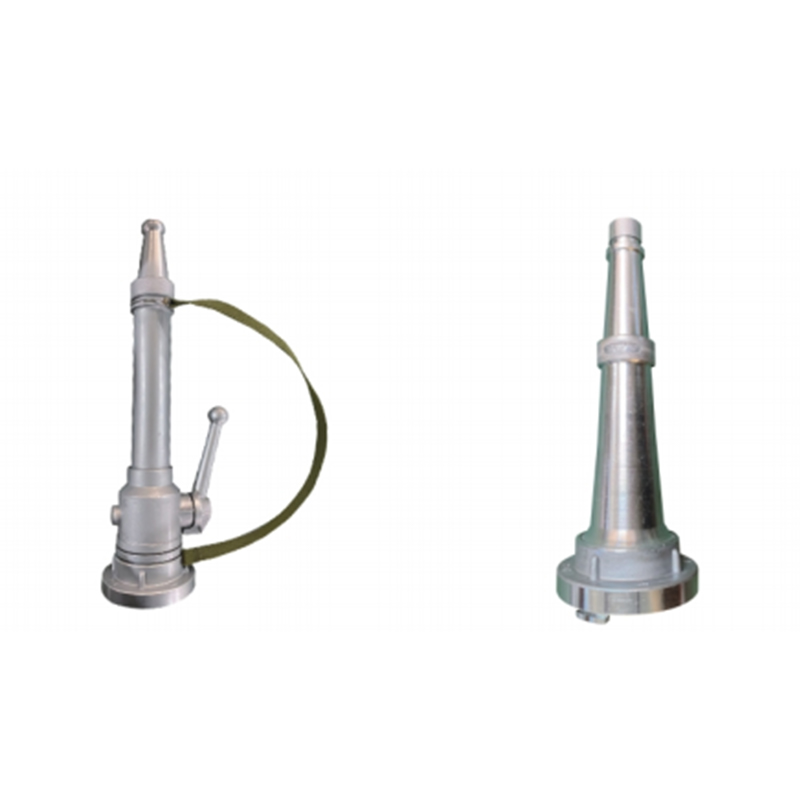
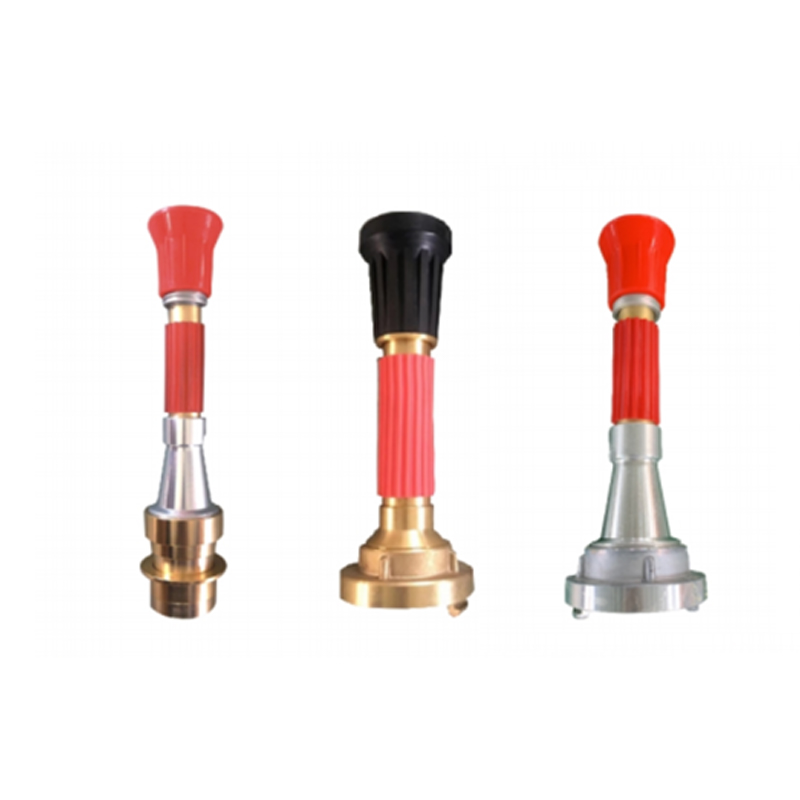
A sample of fire hose nozzles built for straight stream, fog pattern, and multifunctional operation, engineered for one handed control and long term service on fire apparatus.
Best Fire Fighting Nozzles for Volunteer Fire Departments
Volunteer fire departments face a different set of constraints than career metro houses. Crews may respond with fewer members, apparatus stay in service for well over a decade, and maintenance is often handled by whoever on the roster has the time rather than a dedicated shop. For this operating profile, the best fire fighting nozzles are the ones that are simple to inspect, forgiving of infrequent use, and easy to source replacement parts for years after the original purchase.
A practical nozzle loadout for a volunteer engine typically centers on one adjustable fog nozzle sized to the truck main pump, one fixed gallonage nozzle for reliable flow during a rural water shuttle operation, and a spare set of gaskets kept in a labeled compartment tray. Departments running tanker shuttle operations in areas without hydrants often prefer fixed gallonage nozzles because flow stays predictable even as tank pressure fluctuates during drafting, which matters more in a rural response district than pattern versatility.
Example
A 20 member volunteer department running a single engine and a brush truck typically standardizes on two nozzle types across both vehicles, an adjustable fog nozzle for structural calls and a straight stream nozzle for wildland and mutual aid tanker operations, which keeps spare parts and crew training consistent across the fleet.
Partnering With a Fire Fighting Nozzles Manufacturer You Can Trust
Because volunteer apparatus stay on the roster far longer than career fleet vehicles, the manufacturer relationship matters as much as the nozzle specification itself. Tianchang Jinlv Fire Equipment Co., Ltd. is one example of a fire truck equipment manufacturer built for this kind of long service relationship, having focused on fire protection accessories since 2010 and holding GB or T19001 to 2016 quality certification across its production process. As a fire fighting nozzles manufacturer that also produces boarding ladders, roller shutters, and stowage systems, the company supports departments that want a single fire fighting nozzles supplier for both the original apparatus build and replacement parts years later, rather than sourcing fire hose nozzles from a different vendor every time a truck changes hands.
Adjustable Fog Nozzle vs Fixed Gallonage Nozzle: Which Should You Buy
This comparison comes down to how much control a crew needs over pattern versus how much they need predictable flow under changing pressure. An adjustable fog nozzle lets a firefighter dial pattern and sometimes flow rate at the nozzle tip, which is valuable for engine companies handling a wide range of call types in a single shift. A fixed gallonage nozzle delivers a set flow rate regardless of small pressure swings, which many departments value for training consistency and for master stream applications where a known flow number feeds directly into fire flow calculations.
Decision Checklist for Nozzle Selection
1Confirm the flow range printed on the nozzle matches your pump discharge pressure at typical hose lay lengths
2Decide whether crews need pattern flexibility for interior work or predictable flow for exterior master stream use
3Check thread standard against existing hose couplings before ordering any fire hose nozzles
4Ask your fire fighting nozzles supplier whether flow calibration and thread machining are available for custom orders
Field Note
Departments that train primarily on one nozzle type tend to perform more consistently under stress than departments that rotate between several unfamiliar designs. Standardizing on one adjustable fog nozzle and one fixed gallonage nozzle across the fleet, rather than mixing several brands, reduces the chance of a firefighter reaching for an unfamiliar control under low visibility.
Fire Fighting Nozzles for Wildland and Brush Fire Operations
Wildland and brush fire operations place different demands on fire fighting nozzles than structural firefighting does. Crews often work with smaller diameter hose, lower flow rates, and apparatus that carry limited onboard water, which means every gallon needs to be used efficiently. Lightweight hard anodized aluminum nozzles are common in this setting because crew members may carry a hose line on foot for extended distances, and reducing hand tool weight matters over a long shift on uneven terrain.
Flow rates for wildland nozzles typically sit lower than structural fog nozzles, often in the 10 to 60 gallon per minute range, since brush trucks carry smaller tanks and need to stretch water supply across a longer operational period. Twist style or adjustable pattern nozzles remain popular in wildland use because a single firefighter can shift between a penetrating stream for hot spots and a wider fog pattern for exposure protection without swapping equipment mid operation. Departments specifying nozzles for a new wildland unit should confirm with their fire fighting nozzles manufacturer that flow ratings have been tested at the lower pressure ranges typical of brush truck pumps, not just standard structural engine pressures.
Choosing fire fighting nozzles correctly is less about finding one universal product and more about matching flow rate, pattern control, and thread standard to how a department actually operates, whether that is a career engine company, a volunteer tanker shuttle crew, or a wildland brush unit. Working with an established fire fighting nozzles manufacturer and fire hose nozzles supplier that documents flow testing, supports custom thread and OEM options, and stands behind parts availability for the long service life of an apparatus gives departments a nozzle program that performs consistently call after call.
News
-
-
Two minutes into a working fire, a crew stands in front of a locked steel security door with a crowbar that is too short to pull with both hands. Nothing about the tool is broken. It was simply speci...
READ MORE -
Quick Answer The right fire truck boarding ladder is a fixed, upward-folding, or rotating step assembly mounted at the rear or side of the apparatus that gives firefighters a stable, non-slip surface ...
READ MORE -
Fire truck ladder racks are roof-mounted storage and deployment systems that hold ground ladders securely in transit and let firefighters lower them to the side or rear of the apparatus in seconds. ...
READ MORE -
A firefighter opens a compartment door after a long working fire. Inside, the thermal imaging camera has slid under a halligan bar, the hose line is twisted into a knot, and a 20 kg SCBA cylinder is ...
READ MORE -
Every firefighter has opened a compartment door after a rough response only to find nozzles, webbing, and wrenches piled on top of each other. In gloves and low light, with the pump running, that is ...
READ MORE
Hey! Interested in staying in the loop? Sign up for our updates.
WE WON'T SPAM YOU, PINKY PROMISE.

Tianchang Jinlv Fire Equipment Co., Ltd.
Copyright © Tianchang Jinlv Fire Equipment Co., Ltd. All rights reserved. Custom Fire Truck Equipment Supplier Fire Apparatus Parts Factory
